Size Guide
Most barbers work between 6.0" and 7.0". Here's how to find your fit.
Quick rule of thumb
Hold your palm flat, fingers together. Measure from the tip of your middle finger to the base of your palm (where your wrist starts). That measurement in inches is your starting shear size. Most barbers then go up 0.5"–1" for over-comb work.
Size by technique
| Size | Best for | Products |
|---|---|---|
| 5.0"–5.5" | Beard detailing, ear work, precision finishing, smaller hands | Shop 5.5" |
| 6.0" | All-round daily cutter, fades, point cutting — the safe bet | Shop 6.0" |
| 6.5" | Barber favourite — SOC, fade blending, versatile for most cuts | Shop 6.5" |
| 7.0" | Power cutting, bulk removal, heavy over-comb, tapers | Shop 7.0" |
| 7.5"+ | Flat tops, extra-long over-comb, traditional barbering, large hands | Shop 7.5"+ |
Size by persona
- Apprentice: Start with 6.0" or 6.5" — versatile enough to learn every technique without fighting the tool.
- Working barber: Most land on 6.5" as their daily driver. Add a 7.0" for heavy over-comb and a 5.5" for detail work.
- Scissor specialist: 6.5"–7.0" convex for premium scissor cuts. Slide cutting and point work feel best in this range.
- Mobile barber: Carry a 6.0" (versatile) and a 6.5" or 7.0" (power). Keep the kit light.
Thinning shears
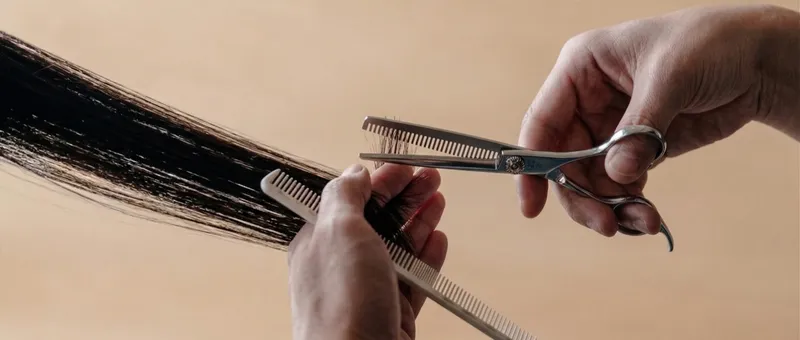
Thinning shears are typically 5.5"–6.0" regardless of your cutting shear size. The shorter blade gives you more control for blending work. Tooth count matters more than length — see our thinning shears collection for guidance.