Free Shipping on All Scissors · Afterpay Available

Barber Shears vs Hairdressing Scissors: What Actually Differs

Blade length, edge type, and balance all shift when you cut barber-style. Here is what separates a true barber shear from a salon scissor.

Walk into any supplier and you will see “barber scissors” and “hairdressing scissors” listed as if they are different species. In truth they sit on the same family tree, but the way a barber works the chair pulls the design in a specific direction. If you spend your day on tapers, fades, and over-comb work, the wrong tool fights you on every pass. This guide explains what genuinely separates the two so you can spend with intent rather than on a label.

They Start From the Same Place

A scissor is a scissor: two blades on a pivot, a set of finger holes, and a tensioned edge that shears hair cleanly when the geometry is right. Most quality “hairdressing” scissors and most quality “barber” scissors are forged from the same stainless families, finished in the same workshops, and serviced by the same sharpeners.

The differences are matters of degree, not kind. Barber-oriented shears tend to skew longer, run a particular edge profile, and carry their weight differently. None of that is magic. It is the predictable result of designing for a barber’s most repeated movements. Browse the cutting shears collection and you will notice the same brands appear in both salon and barber guises, with the barber models nudged toward these traits.

Blade Length: Why Barbers Reach Longer

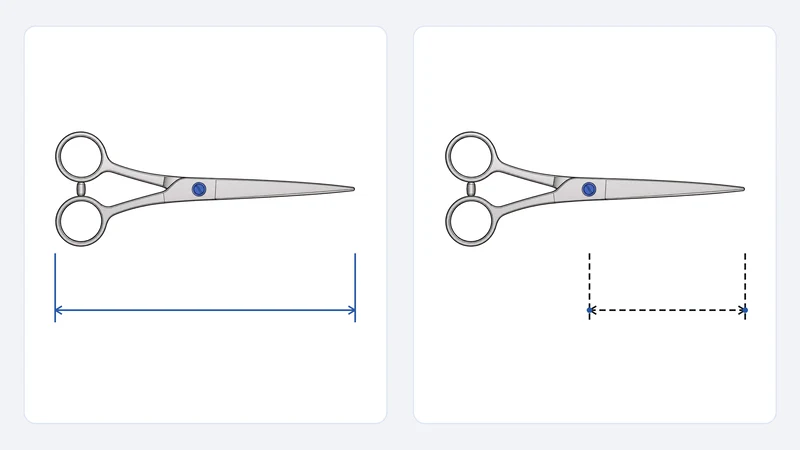
Length is the most visible difference. Salon stylists commonly work in the 5.0 to 6.0 inch range because detailing, slide cutting, and razored layering reward a shorter, nimble blade. Barbers more often land between 6.5 and 7.5 inches.

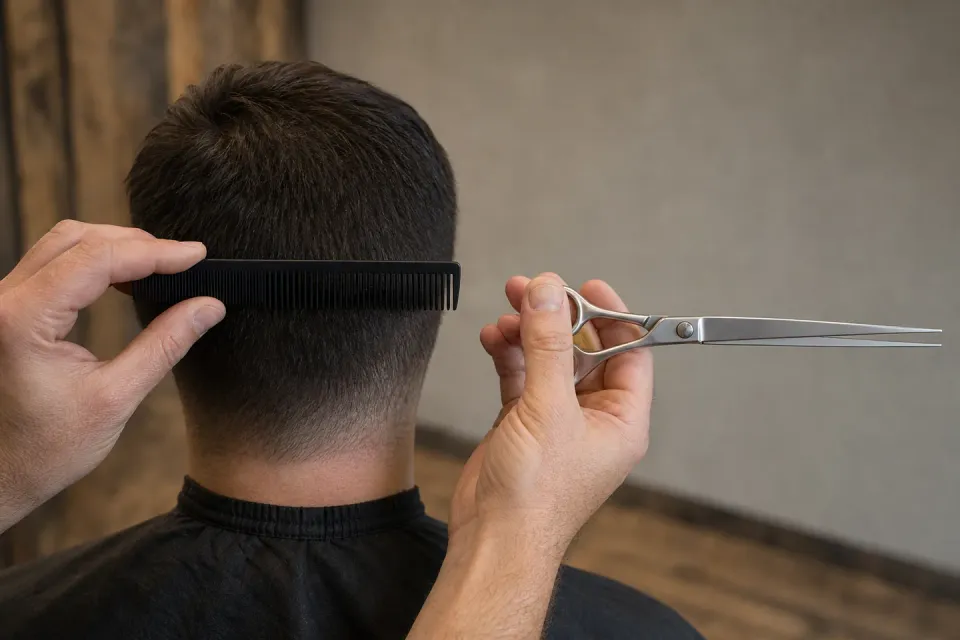
The reason is mechanical. Scissor-over-comb and clipper-over-comb both ask the blade to span the comb’s spine and travel in long, confident strokes. A longer blade covers more hair per pass, keeps your guideline straighter, and lets you finish a panel in fewer movements. On a busy Saturday that efficiency is real money and real wrist preservation.

There is a trade-off. Longer blades are less forgiving in tight detail work around the ear and along the neckline. That is why many barbers run a two-shear kit: a longer primary for over-comb and bulk, and a shorter shear for finishing. The Yasaka 7.0 Inch Barber Cutting Scissors is a textbook over-comb length, while a 6.0 to 6.5 inch tool handles the close-in work. If you are unsure where you sit, our shear selection tool maps length to technique and hand size.

Edge Type: Convex vs Bevel

This is the difference barbers feel before they can name it.

Convex edges are ground to a continuous curved face, honed to a near-mirror finish. They glide through hair with almost no resistance and almost no sound, which is exactly what you want for slide cutting, point cutting, and clean finishing. Most premium Japanese-style barber shears use a convex edge. The downside is that convex edges demand a specialist sharpener and punish drops, since a chip on a polished hollow edge is unforgiving.

Bevel edges carry a flat ground angle, sometimes with micro-serrations on one blade. They grip the hair rather than gliding through it, which stops strands sliding out the front of the blade during scissor-over-comb. That grip is forgiving when your tension drifts and makes them a sensible apprentice and high-volume choice. German-style shears often lean this way.

For most barber work, a convex primary plus a beveled or micro-serrated backup is the pragmatic combination. The convex handles your money strokes; the bevel grips regrowth and survives the rough days. Tools like the Juntetsu VG10 Ergo Barber Scissors show the convex approach in a barber-tuned body.

Weight and Balance for Over-Comb Work

Edge gets the attention, but balance is what your forearm remembers at 5pm.

In clipper-over-comb and scissor-over-comb, you are not just opening and closing the blades. You are holding the shear steady against a moving comb, often at an angle, for sustained passes. A shear that is blade-heavy will dive and force you to fight it upward all day. A shear that is too handle-heavy feels vague and makes your tip work imprecise.

Barbers generally favour a shear that balances close to the pivot or very slightly toward the handle, so the tips feel light and controllable while the body stays planted. Offset and crane handle designs help here by dropping the thumb into a more neutral position, which keeps your elbow down and your shoulder relaxed through long over-comb sessions. A heavier, dead-balanced sword shear like the Ichiro Sword Barber Scissors suits barbers who want planted authority for bulk removal, whereas a lighter ergo body suits all-day detailing.

There is no universally correct weight. A barber doing high-volume short back and sides will value a planted, slightly heavier shear that powers through thick hair. A barber doing detailed scissor work on longer styles will want something lighter and quicker. Match the weight to the work you actually repeat most.

Handle Geometry Matters More for Barbers

Because over-comb work holds the hand in one posture for long stretches, handle shape carries extra weight for barbers.

  • Classic (even) handles keep both rings level. Traditional, but they can splay the thumb and stress the wrist over a full day.
  • Offset handles drop the thumb ring forward, letting you cut with a more open, relaxed hand. Most barbers find these the comfortable default for sustained work.
  • Crane handles angle the whole handle down, which is excellent for elevated cutting positions and over-comb, keeping the elbow low.

If you are coming from a salon background, switching to an offset or crane handle is often the single biggest comfort upgrade when you move into full-time barbering.

Why Barbers Often Prefer Certain Sizes

Put the pieces together and the “barber” preference becomes logical rather than mysterious:

  • 6.5 to 7.0 inch is the barber workhorse zone. Long enough for confident over-comb, short enough to still detail.
  • 7.5 inch and up suits barbers doing heavy bulk removal or working taller clients, where reach and authority matter more than fine detailing.
  • 6.0 inch and below earns its place as a finishing shear for necklines, sideburns, and around the ear.

A salon stylist chasing soft internal layers genuinely benefits from a shorter, lighter, ultra-glide convex shear. A barber chasing crisp guidelines and clean over-comb benefits from more length and a balance that stays planted. Same family, different job.

Choosing Your First Barber Shear

If you are building a kit, start with one well-balanced 6.5 to 7.0 inch convex primary in a handle that suits your hand, then add a shorter finisher and a gripping backup as your work demands. Do not over-buy on length before you know your style settles.

Browse the full cutting shears range to compare lengths and edges side by side, or run the shear selection guide to narrow the field by technique, hand size, and budget. The label on the box matters far less than how the tool sits in your hand during the tenth over-comb pass of the day.