Convex vs Bevel Edge: Which Barber Shear Edge Is Right for You?
The edge profile decides how a shear feels in your hand, how you cut with it, and how you look after it. Here is how to choose.
Two barbers can own shears that look almost identical and cut completely differently, and the reason usually comes down to one thing: the edge. Convex and bevel are the two main edge profiles you will meet, and the choice between them shapes how a shear feels, what techniques it favours, how durable it is, and how much fuss it takes to maintain. This guide explains both honestly so you can match the edge to the work you actually do rather than to whichever word sounds more premium.
What the Edge Actually Is
The edge is the ground geometry where the two blades meet and shear the hair. It is not the same as the steel or the brand; you can find good and bad examples of both edge types. What the edge controls is the character of the cut: whether the shear glides or grips, how quiet it is, how it behaves during slide cutting, and how forgiving it is when your tension drifts.
Get this distinction clear and a lot of scissor marketing stops being confusing. Steel determines how long an edge lasts and how it sharpens; the edge profile determines how that steel feels in your hand on every pass.
Convex Edge: The Glide
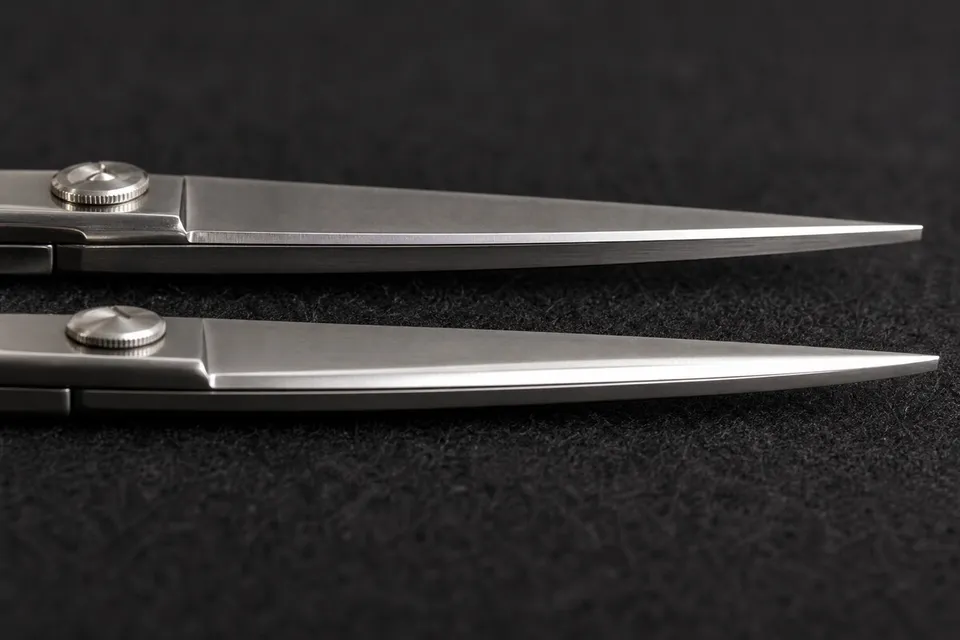
A convex edge is ground to a continuous curved face and honed to a near-mirror polish. The result is a blade that glides through hair with almost no resistance and almost no sound. This is the edge on most premium Japanese-style barber shears, and once you have used a good one the smoothness is hard to give up.
How it feels: silky, quiet, and effortless. The shear seems to do more of the work, which lets you cut with finesse and confidence.
What it favours: slide cutting, point cutting, and clean finishing work. The glide is exactly what you want when you are working hair along the blade rather than chopping straight across it. For detailed, finish-focused barbering on a range of lengths, convex is the edge that feels right.
The convex edge is the premium default for good reason: it cuts beautifully and suits the techniques most barbers use for refined work. The catch, as we will see, is that it asks for more care.
Bevel Edge: The Grip
A bevel edge carries a flat ground angle, sometimes with fine micro-serrations on one blade. Instead of gliding through the hair, it grips it, holding strands in place so they shear cleanly rather than sliding out the front of the blade. German-style shears often lean this way, and it is a profile with real practical virtues for certain barbers.
How it feels: secure and confident, with audible feedback. You hear and feel the cut, which some barbers find reassuring.
What it favours: scissor-over-comb, blunt cutting, and high-volume work. The grip stops hair escaping the blade during over-comb, which is forgiving when your tension is not perfect, and the micro-serration can help control slippery or fine hair.
The bevel edge is the unsung hero for apprentices and high-volume barbers. It is less glamorous than a polished convex, but its grip and forgiveness make it a genuinely sensible working edge, particularly while your technique is still settling.
Cutting Feel Compared
Put simply: convex glides, bevel grips. A convex edge rewards a confident, fluid hand and excels at techniques where the hair moves along the blade. A bevel edge rewards control and excels at techniques where you want the hair held firmly in place.
Neither is better in the abstract. A barber doing delicate slide work on longer hair will love a convex glide and find a gripping bevel intrusive. A barber doing high-volume over-comb on short back and sides will value the bevel’s secure hold and find it more forgiving when the day gets frantic. The right answer depends entirely on what you repeat most.
Technique Fit
To make it concrete, here is how the edges map to common barber work:
- Scissor-over-comb and clipper-over-comb: a bevel grip is forgiving and secure, but many skilled barbers happily use convex here once their tension is reliable.
- Slide cutting and point cutting: convex, every time. The glide is essential and a bevel will drag.
- Blunt cutting and guidelines: both work, with convex giving a cleaner finish and bevel giving more grip on the strand.
- Texturising and detail: convex suits fine finishing; bevel suits controlled bulk work.
For most barber work, the pragmatic answer is a convex primary for your money strokes and a beveled or micro-serrated backup for over-comb and rough days. The two edges cover each other’s weaknesses. Browse the cutting shears collection to compare both profiles side by side.
Maintenance Compared
This is where the choice gets practical, and where a lot of barbers get caught out.
A convex edge must be sharpened by a specialist on the correct equipment, because the curved, polished face cannot be touched up on a flat hone without ruining it. A good convex sharpener is worth their weight in gold, and you should book service before the edge starts dragging rather than after. The upkeep is more demanding and more expensive, but a well-maintained convex edge is a joy to use.
A bevel edge is more straightforward to maintain and can often be serviced more conventionally, which makes it cheaper and easier to keep in good order over time. For a barber who wants a lower-fuss tool, that simplicity is a real advantage.
Both edges need the same daily basics regardless of profile: wipe the blades after each client, oil the pivot daily, and keep the tension correct so the edge does the work rather than your hand.
Durability Compared
Durability is mostly about how each edge survives the realities of a busy shop. A convex edge is finely honed and unforgiving of impact; drop one and a chip on that polished hollow face is likely, and it needs a proper sharpener to correct. A bevel edge, with its flatter, more robust geometry, tends to be more tolerant of knocks and the rough handling that happens on a busy day.
This is why the bevel edge is often recommended for apprentices and for barbers who are hard on their tools. It is simply more forgiving of the accidents that finely honed convex edges punish. If your workflow is tough on gear, that resilience is worth weighing seriously.
So, Which Should You Choose?
If your work is detailed, finish-focused, and slide-heavy, and you are willing to maintain it properly, a convex edge is the right call and the premium experience most barbers aspire to. If your work is high-volume over-comb, blunt cutting, and you want a forgiving, lower-fuss, more durable tool, especially while your technique settles, a bevel edge earns its place and saves you money on upkeep.
For most working barbers the honest answer is both: a convex primary for refined cutting and a beveled backup for over-comb and the rough days. That combination gives you glide where you want it and grip where you need it, without asking one edge to do a job it is not built for.
When you are ready to compare specific shears by edge, length, and technique, run the shear selection guide to narrow the field, or browse the full cutting shears range to see how each edge feels in the brands you are considering. Choose the edge that suits the work in front of you, not the one that sounds the most impressive on paper.