Razors and Blades: The Basics for Barbers
Open edge, guarded edge and double-edge, why the handle names the blade, and how to handle, change and dispose of blades.
Quick answer
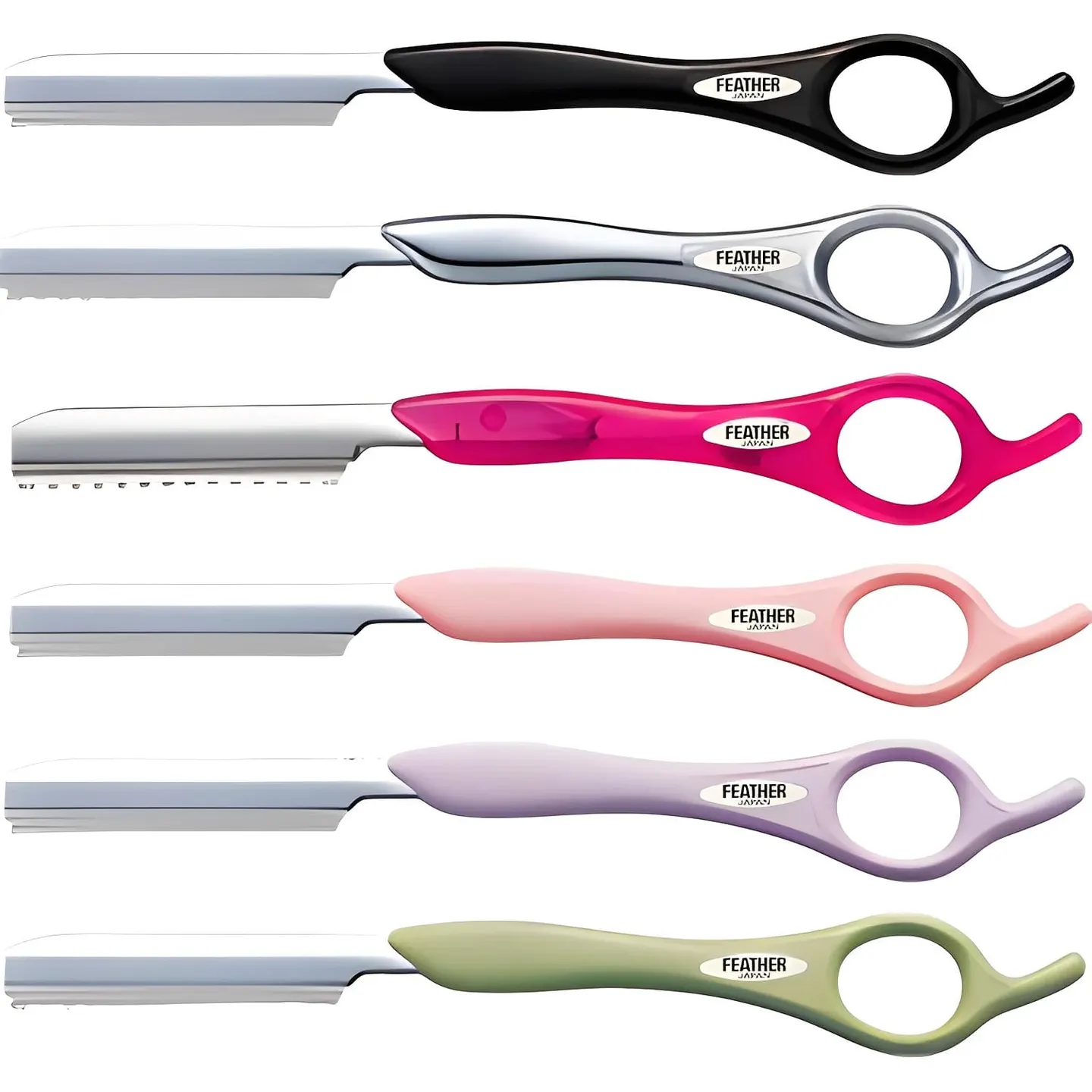
Barbers use three kinds of razor: folding razors with replaceable blades for outlines and necks, styling razors for cutting and texturing hair, and double-edge safety razors for shaving. The handle decides which blade fits, so buy the blade that names your handle. Change blades as your hygiene rules require and handle every blade as a sharp.
Razors in a barber kit fall into three groups: folding razors with replaceable blades, styling razors for cutting hair, and double-edge safety razors. Each handle takes its own blade family, so the handle decides the refill. This guide covers the principles; a job-by-job selection comes separately.
Key takeaways
- Three families: folding razor with a clamp, styling razor, double-edge safety razor.
- Open edge cuts at once. Guarded edge takes less per stroke.
- Read the handle name first, then buy the blade it takes.
The three razor families
Scroll sideways to compare all columns.
| Family | What it is | Typical use |
|---|---|---|
| Folding razor with replaceable blade | A folding handle with a clamp that holds a blade section | Line-ups, outlines, neck shaves |
| Styling razor | A straight handle for a guarded or open blade | Razor cutting and texturising hair |
| Double-edge safety razor | A head that holds a double-edge blade, boxed or stand-mounted | Wet shaving |
A folding razor is the replaceable-blade version of the classic barber straight razor: the blade is a consumable, not a fixed steel edge you strop and hone. That is why barbers can change blades quickly.
Open edge or guarded edge
An open edge is fully exposed and cuts as soon as it touches. A guarded edge has a guard behind the edge that limits how much each stroke takes.
Guarded blades suit razor cutting, because they soften ends and remove weight gradually. Open blades suit line-ups and edging, where a crisp outline is the aim. Neither is better; they are different tools for different jobs.
The handle decides the blade
Razor blades are not interchangeable across handles. Each handle takes a blade family, and the pack states which one. A pack bought for one handle may not clamp, seat or sit correctly in another.
The rule is short: read the handle name, then buy the blade named for that handle. The Feather brand page lists the handles and the blade family each one takes, and the razors collection shows what is available.
Handling a razor
- Fit the blade with the handle closed or the clamp open, per the maker’s instructions, never by pinching the edge.
- Hold with the fingers well behind the edge. Keep the free hand clear of the blade path.
- Use short, controlled strokes. Stretch the skin where the work needs it, and keep the angle low and consistent.
- Stop if the blade drags. A dragging blade is past use or is the wrong blade for the work.
These are handling basics. A razor needs practice on a training aid or under supervision before it goes near a client. Barber training courses cover it in depth.
Changing, storing and disposing of blades
- Changing. Follow the infection-control rules for your state or territory and your premises. A fresh blade for the client is the common practice in many shops, but the rules decide.
- Storing. Keep new blades in their pack, dry. Keep razors closed and in a case or pouch.
- Disposing. Place used blades in a rigid, puncture-resistant sharps container, not loose in the bin. General workplace guidance is at Safe Work Australia, and local rules apply.
Opened razor blades are a hygiene product, so the returns policy treats them differently from an unopened pack.
Razor versus scissors: which for which job
A razor and a scissor do different things to the hair. A razor slices and thins at an angle; a scissor cuts a clean line across. Use the razor for outlines and razor-cut texture, the scissor for length and shape.
For line-ups and neck work with scissors, see the beard and neckline guide. To decide between clippers and shears for a given cut, see scissors versus clippers. A complete station is in the barber shop kit guide.
Setting up a razor station
Even a single razor needs a tidy arrangement. Set it up so the safe way is the easy way.
- A closed place for the razor between uses, such as a pouch or a slot in the case, so the edge is never loose on the bench.
- Blades in the pack, with the handle name visible, kept dry and out of reach of clients.
- A rigid sharps container within reach of the working hand, so a used blade goes in straight away.
- Good light and a steady surface where the work is done.
- A card with the blade family for each handle if more than one handle is in use, so the right pack is chosen quickly.
For a team, standardise on one handle where you can and label the packs. That removes most of the “wrong blade” mistakes, and it makes the sharps routine the same for everyone. The barber kit guide shows where the razor sits in the full kit.
Common mistakes
- Buying a blade for a different handle. It will not fit or sit properly.
- Using a dull blade for one more client. Drag leads to poor results and an unsafe stroke.
- Loose blades in a drawer. Keep them in the pack.
- Dropping used blades in the general bin. Use a sharps container.
- Skipping the closed-case habit. Close the razor and case it.
Pick by stage
- Apprentice: learn handling and hygiene rules first. A single folding razor and a pack of blades is enough to start.
- Working barber: add a styling razor if you razor cut.
- Shop owner: stock one blade family per razor type, labelled by handle, so staff cannot grab the wrong pack.
More guides are indexed in the knowledge base, and the Feather range lists every handle and blade.
Further reading: Scissorpedia is an information website and a fellow member of the ShearAlliance.
Questions
What is the difference between an open and a guarded razor blade?
An open blade has a fully exposed edge and cuts at once. A guarded blade has a guard behind the edge that limits how much hair each stroke takes, so you build the result over several passes.
Can I use any blade in any razor?
No. Each handle takes one blade family, and a pack for one handle does not fit another. Read the handle name and the blade name before you order.
How often should a barber change a razor blade?
As often as your shop's hygiene rules and the work require. A blade that drags or pulls is past its use. Check the infection-control rules for your state or territory.
How do I dispose of used blades?
Into a rigid, puncture-resistant sharps container, not loose into the bin. Local rules apply, so check them for your premises.
Do you sell straight razors?
The range includes folding razors that take replaceable blades, styling razors and a double-edge safety razor. See the razors collection for what is available.