The Barber Shop Kit: What a Full Kit Holds and Why
Every tool a working station carries, what each one does, and the order to build it in.
Quick answer
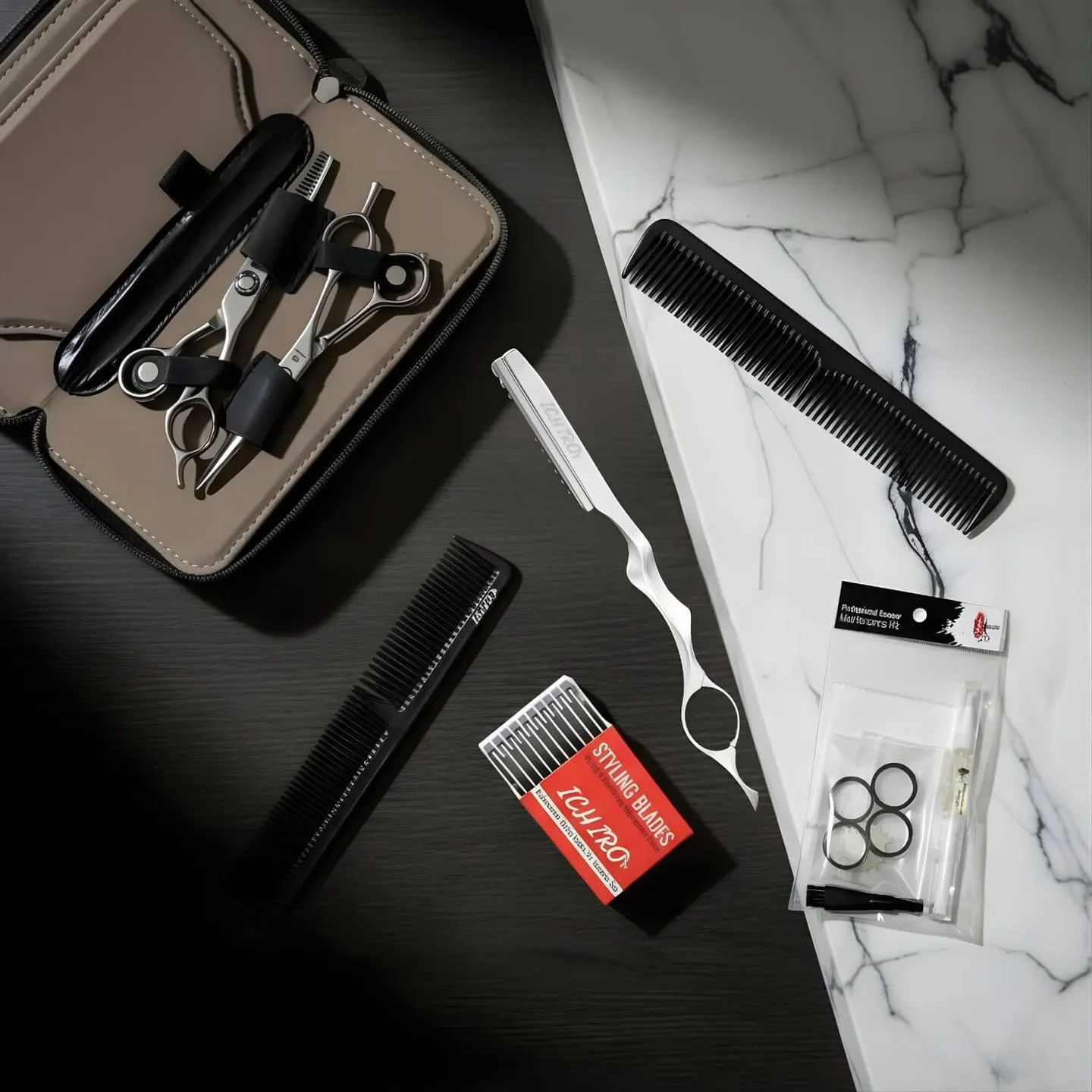
A full barber kit has a long cutter for over-comb, a short cutter for detail, a fine blender, cutting combs, a razor, clippers and trimmers, care items and a case that closes. Each tool covers one job the others cannot. Build it in that order, buying the next tool only when the work calls for it.
Top picks
Cutter and thinner set
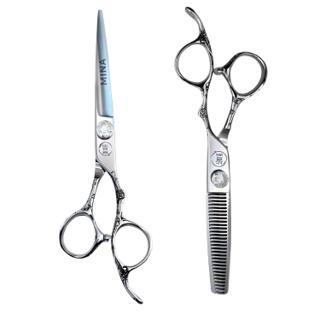
Mina Sakura II Professional Scissors Set
Cutter in five lengths plus a 6.0″ thinner
A full barber kit holds the tools that cut, blend, edge and finish, plus the items that keep them working. Each tool covers one job the others cannot, so the kit is a list of jobs, not a count of scissors. Start with the cutter and add the rest when the work calls for it.
Key takeaways
- Cutters set length and line. A blender softens. A razor edges.
- Combs and care items are part of the kit, not extras.
- Build in order: cutter, detail, blender, care and case, then the rest.
The kit by job
Scroll sideways to compare all columns.
| Job | Tool | Why it is there |
|---|---|---|
| Over-comb and long lines | 6.5″ to 7.0″ cutter | Covers more comb per pass |
| Detail, ears, neckline | 5.0″ to 5.5″ cutter | Tip control in small spaces |
| Blending and weight | 28 to 40 tooth blender | Softens the weight line |
| Bulk on thick hair | 10 to 16 tooth texturiser | Removes weight faster |
| Lifting hair to cut | Cutting combs | Set length and line |
| Outlines and neck | Razor and blades | Crisp edges |
| Base length | Clippers and trimmers | Fast, even short lengths |
| Pivot care | Oil and cloth | Keeps the action smooth |
| Storage | Case, wallet or holster | Protects edges between uses |
The scissor core
Two cutters and one blender do the bulk of scissor work. The long cutter handles the transition and top, as in the scissor over comb guide. The short cutter does the ears and lines. The blender softens the line the clippers leave. The length guide explains the lengths.
Keep the handle style the same across the three, so the hand does not change when the tool does. Sets pair a cutter and a thinner in one handle.
Combs
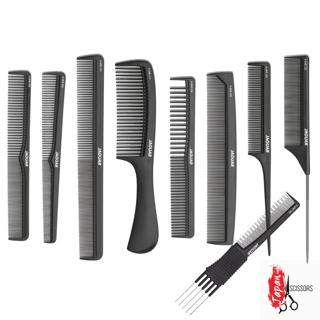
A cutting comb sets length and line for scissor over comb, and a second comb with different tooth spacing handles other hair. They are consumable: teeth chip and warp, and a damaged comb gives an uneven line. The cutting comb picks compare them. Browse the accessories range.
Razor and blades
A folding razor with replaceable blades covers outlines and neck work, and a styling razor handles razor cutting. Each handle takes its own blade family. See razors and blades basics for the principles and the razors collection for the range.
Clippers and trimmers
Clippers set the base length and trimmers do the edges. They are a separate buying decision from scissors, and the scissors versus clippers guide explains which tool fits which job. This guide does not cover clipper selection.
Care items and storage
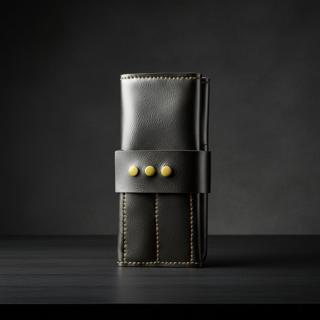
Oil, a soft cloth and a brush protect the scissors. A case, wallet or holster protects the edges when the tools are not in use. Closed blades in separate pockets last longer than loose tools on a bench. The cases guide compares options, and the maintenance guide covers the routine.
Build order by stage
- First cutter. A 6.0″ or the length your technique needs. See the first kit guide.
- Combs, oil and a case. Cheap, and needed from day one.
- Blender. When blending starts to matter.
- Detail cutter or long cutter. The one you are missing.
- Razor and blades. When the services include edging.
- Texturiser. For thick or coarse hair.
What can wait
- A second long cutter.
- A full set of thinner tooth counts.
- Premium steel before the technique is stable.
- Specialty finishes: the finishes guide explains what they add.
Three example kits
These examples show how the same list scales. Treat them as patterns, not prescriptions.
An apprentice’s kit. One 6.0″ cutter, a cutting comb, oil, a cloth and a case that closes. A razor and blades if the course teaches them. Nothing else until the technique is steady.
A working barber’s kit. A 7.0″ and a 5.5″ cutter in the same handle style, a 30-tooth blender, two combs, a folding razor with blades, care items and a wallet with a slot for each tool. Clippers and trimmers are on the station.
A shop station. The working barber’s kit, plus a spare cutter in the same hand, a texturiser on the shared shelf, a sharps container at the razor, and the care card. The team kit guide explains how spares and rotation work across several chairs.
Each step up adds a job, not just a tool. If you cannot name the job a new tool will do, leave it out of the kit.
Common mistakes
- Buying scissors and skipping combs. The line depends on the comb.
- Mixed handles across the set. It changes the feel from tool to tool.
- No case. Edges get damaged in a drawer.
- Buying for a job you do not offer. Wait until the work calls for it.
- Treating the razor as optional hygiene. It carries its own rules; follow yours.
Pick by stage
- Apprentice: cutter, comb, oil, case.
- Working barber: long and short cutters, blender, razor.
- Shop owner: the team kit guide covers matched sets and spares.
Every barber how-to and buying guide is in the knowledge base.
Further reading: Scissorpedia is an information website and a fellow member of the ShearAlliance.
Questions
What is in a barber's kit?
Cutting scissors in a long and a short length, a thinner or blender, combs, a razor, clippers and trimmers, care items such as oil and a cloth, and a case or holster. The exact set follows the work.
How many scissors does a barber need?
Two cutters cover most work: a 6.5″ to 7.0″ for over-comb and a 5.0″ to 5.5″ for detail. Add one blender. More than that is a specific job, not a starting point.
Do I need a razor in my kit?
If your services include outlines, neck shaves or razor cutting, yes. A barber who does only scissor and clipper work can add one later.
What should a barber carry to a client's home?
The scissor kit, combs, razor, care items and a case that closes. The mobile barber guides cover the travelling version.