Japanese or German Barber Scissors: Choosing Without the Myths
Five common beliefs about origin, tested against the spec rows that actually decide how a scissor cuts.
Quick answer
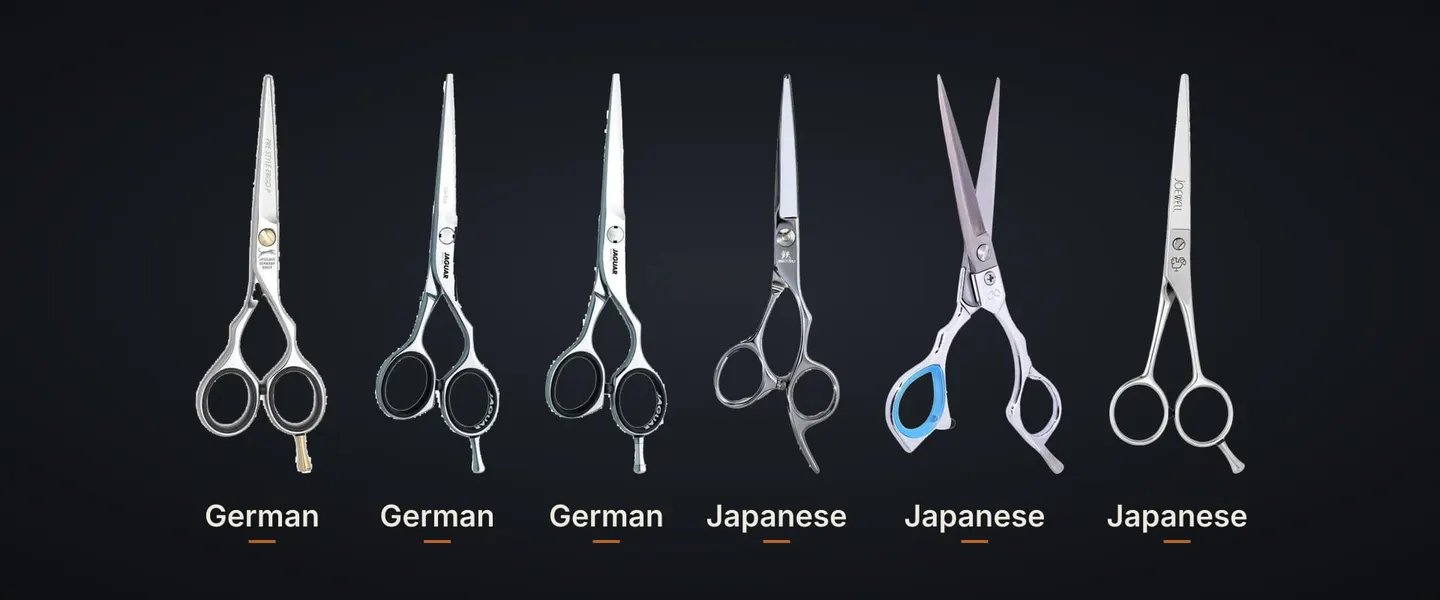
Origin does not choose a scissor for you. Edge, steel, handle, length and service do. Japanese brands such as Mina, Ichiro and Juntetsu lean to convex edges and published hardness figures, while German-made Jaguar leans to micro-serration and named steels. Start from your technique, then read the spec rows.
Top picks
German-made classic
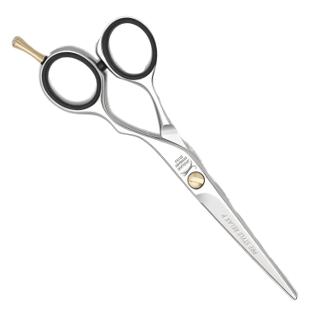
Jaguar Pre Style Relax P Hair Cutting Scissors
Offset, classic blade, 5.5″ and 6.0″
Japanese or German is a shortcut people use in place of a decision. The shortcut breaks, because origin says little about the things that decide how a scissor cuts: edge, steel, handle, length and how it is serviced. Use origin as context, and use the spec rows to choose.
Key takeaways
- Edge, handle and length decide the fit. Origin does not.
- The Japanese brands here lean convex. German-made Jaguar leans micro-serrated and classic.
- Decide your technique first, then read the specs.
What origin tells you, and what it does not
Origin tells you where a brand’s scissors are made or designed, and it hints at habits of that brand: which edges it favours, which handles it makes, whether it lists hardness. It does not tell you how a particular model will cut, how it sits in your hand or how long it holds an edge.
The Japanese versus German comparison lays out the range by edge, steel and handle. This guide is about making the decision.
Five myths, tested against the spec
Scroll sideways to compare all columns.
| Myth | What the spec rows say |
|---|---|
| Japanese scissors are always sharper | Sharpness comes from the edge and the finish on a given pair, and it is restored by servicing. Both origins sell sharp pairs |
| German scissors are tougher | Toughness depends on the steel and edge on each model, not the country |
| Higher HRC always means better | HRC is one number. Edge shape, handle and fit matter as much. See the steel guide |
| Origin tells you the steel | Steel is listed per model. Read the row |
| A brand from one country is made there | Not always. See Kamisori below |
How the brands differ in practice
Some patterns are real. They are patterns, not rules.
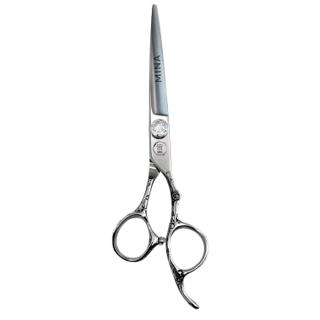
- Mina, Ichiro and Juntetsu are independent Japanese brands. Their listings lean to convex edges, offset handles and published HRC figures.
- Jaguar is German-made. Its listings lean to micro-serrated edges and classic handles and name the steel, such as chromium stainless or molybdenum. Jaguar’s production page is the maker’s account of its German production.
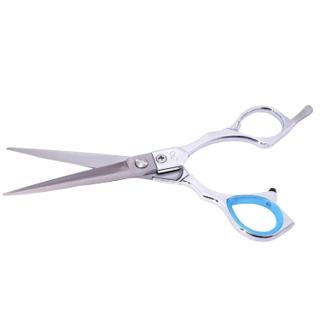
- Yasaka and Joewell are Japanese makers: Yasaka’s range is built on a clam-shaped convex edge and Joewell’s includes classic-handle models.
- Kamisori is a Canadian brand with Japanese-inspired designs; some models are made in Japan. It shows why a flag on a brand name can mislead.
The brand map compares the ranges, and are Jaguar scissors good? and are Mina scissors good? go deeper on two of them.
Start from your technique
- Slide cutting is your main method. Choose a convex edge. Several Japanese brands make them, such as Yasaka and Mina.
- Fine or slippery hair that slips off the comb. A micro-serrated edge grips. Jaguar makes them.
- Over-comb is most of your day. Choose a 7.0″ and read the long scissors list; both origins appear on it.
- You want a classic, level handle. Check the handle row. Classic handles appear in both.
- You are an apprentice. Choose by hand, length and budget, as in the first kit guide.
Handle and length beat origin
Offset, classic and crane handles seat the hand differently, and a handle that does not fit your hand costs more than any steel advantage. Length decides the job. Both are covered in the handle guide and the length guide, and both appear in the spec rows read in how to read a scissor listing.
Service and support
A scissor is a tool you keep for years. A convex edge needs a sharpener who preserves the curve, and a micro-serrated edge needs one who understands the teeth. Choose a pair you can get serviced. The sharpener handover guide covers what to ask, and the warranty page covers what is covered.
A worked comparison: two apprentices
Two apprentices have the same budget and the same course.
The first mostly cuts short back and sides with over-comb. Her trainer slide cuts and likes a convex edge. She reads the spec rows and picks a 6.0″ offset convex pair from a Japanese brand because the edge and the offset handle match what she is learning.
The second cuts on fine, slippery hair and finds hair keeps sliding off the comb. A micro-serrated edge grips the hair, so he picks a German-made classic-handle pair with micro-serration and learns to use it with a comb.
Both choices are good because they follow the work. Neither is good because of the flag. Swap the apprentices’ pairs and each would find something awkward, not because of where the scissor was made, but because of the edge and the handle. That is the point of reading the rows first.
Common mistakes
- Buying by flag. The row beats the label.
- Chasing the highest HRC. It does not guarantee the best fit.
- Assuming a brand’s country is its factory. Check the origin field.
- Choosing before knowing the technique. Decide the method first.
- Skipping the hand test. A good spec in a handle that does not fit is a poor buy.
Pick by stage
- Apprentice: a convex 6.0″ or a classic German-made 5.5″ to 6.0″, by hand fit.
- Working barber: the edge that suits your technique, in the length you use most.
- Upgrade: premium steel only after the fit and edge are settled; see the steel comparison.
The knowledge base indexes every barber guide.
Further reading: Scissorpedia is an information website and a fellow member of the ShearAlliance.
Questions
Are Japanese scissors better than German scissors?
Neither is better across the board. Japanese brands here lean to convex edges and listed hardness; German-made Jaguar leans to micro-serration and classic handles. Pick by the edge, handle and length your work needs.
Is Jaguar a Japanese brand?
No. Jaguar is German-made. Mina, Ichiro and Juntetsu are independent Japanese brands.
Where is Kamisori made?
Kamisori is a Canadian brand with Japanese-inspired designs; some models are made in Japan.
Does country of origin tell me the steel?
No. Steel is listed per model. Read the steel row on the product page, not the flag.