Left-Handed & Ambidextrous Barber Kits
True left-grind shears, what a flipped right-hander actually does, and how to run a southpaw station.
By James Adams Updated
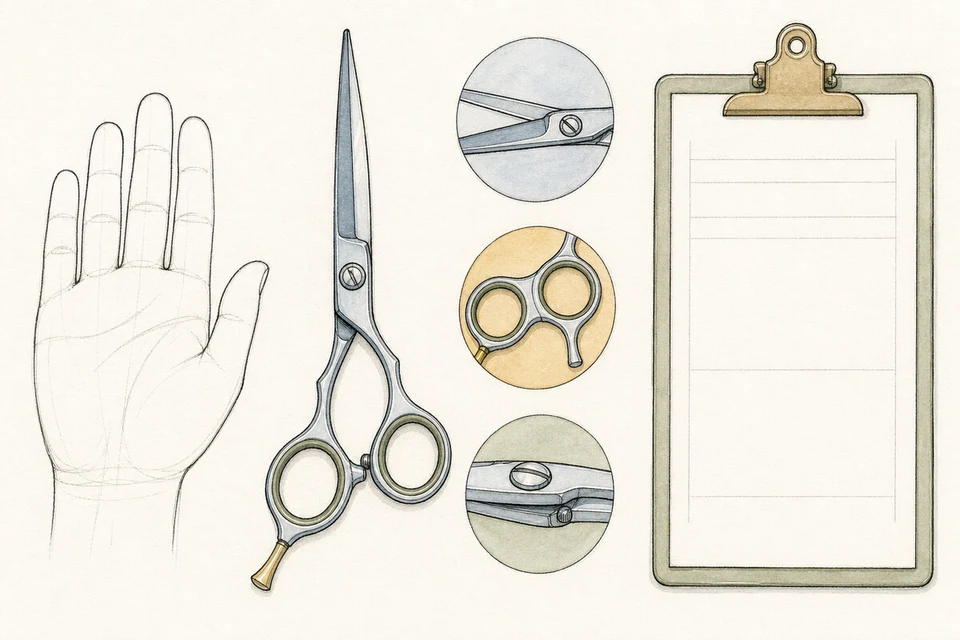
A left-handed barber should start with a shear listed for left-hand cutting. That puts the blade crossing and handle in the intended hand position, so you can judge the edge and tension while you work.
Build the kit
- Main cutter: choose the length you use most. A compact blade helps with detail; a longer one gives reach over the comb.
- Thinner: add one when blending becomes part of your regular work.
- Backup: keep a second usable cutter ready when your main shear is being serviced.
The left-handed collection shows the current options. Check each product’s selected hand and size before ordering; ranges can include both right- and left-hand variants.
When comparing models, focus on the grip, blade length and job. The size guide helps with length, and the handle guide explains the shapes. For a first purchase, choose the tool you can guide accurately rather than trying to buy a full kit at once.