How to Choose Barber Scissors: The Complete Guide
Job first, then length, hand, handle, edge, steel and budget. In that order.

Quick answer
Choose barber scissors by the cut you repeat most. Most barbers start with a 6.0″ to 7.0″ offset cutter in their true hand, with a convex edge for slicing or a bevel edge for grip. Add a thinner when blending is a daily job. Spend on fit and length before steel or finish.
Top picks
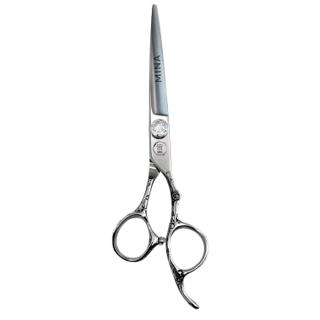
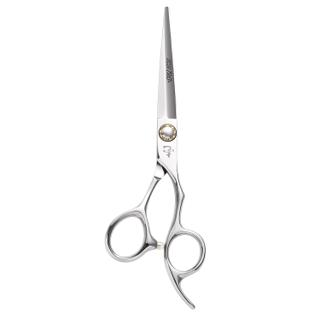
Best working barber cutter
Ichiro Offset Cutting Scissors
Five lengths to 7.0″, sword blade, 440C 58 to 60 HRC
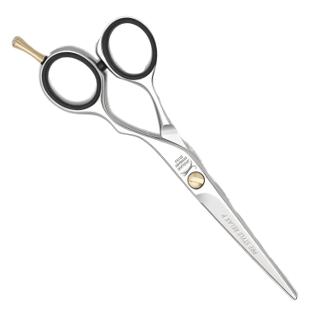
Best German-made option
Jaguar Pre Style Relax P Hair Cutting Scissors
5.5″ or 6.0″ offset, micro-serrated blade
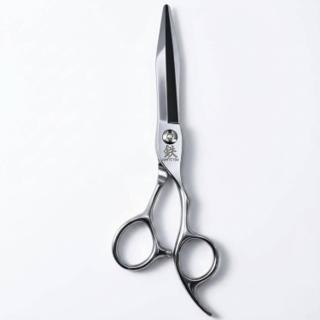
Best upgrade for over-comb
Juntetsu Sword Professional Hair Cutting Shears
6.0″ to 7.0″ sword blade, ATS-314 62 to 63 HRC
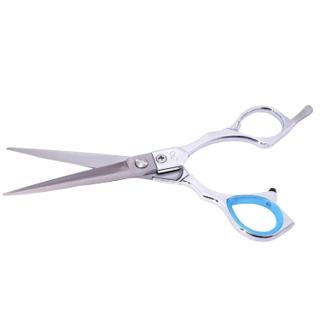
Best Japanese maker upgrade
Yasaka Offset Hair Cutting Scissors
Clam-shaped convex edge, ATS-314, offset
The right pair of barber scissors is the one that fits the cut you do most, in your true hand, at a length you can control. Everything else (steel, finish, brand) comes after that. Work through the seven decisions below in order and you will land on a short list of two or three models.
The detail under each one tells you which size, handle and edge to look for, and the comparison of top barber scissors in Australia puts named models side by side once you know what you want.
Start with the job, then pick the tool
A barber kit is built from jobs, not from a set photo. Most barbers need one main cutter, then add tools only when a job keeps coming up.
Scroll sideways to compare all columns.
| Job you do every shift | Tool | Usual length | Start here |
|---|---|---|---|
| Scissor-over-comb, flat tops, tapers | Long cutter | 6.5″ to 7.0″ | Long scissors for over-comb |
| Outlines, ears, detail on short back and sides | Mid cutter | 5.5″ to 6.0″ | Best scissors for fades |
| Blending and weight removal | Blender, 30 to 46 teeth | 6.0″ | Best thinning shears |
| Texture and chunking thick hair | Chunker, 10 to 16 teeth | 6.0″ to 6.5″ | Thinning vs texturising |
| Slicing long tops | Convex or sword-blade cutter | 6.0″ to 7.0″ | Sword blade shears |
| Ears, outlines, point cutting | Short cutter | 5.0″ to 5.5″ | 5.5″ shears |
One cutter covers most apprentices. A second tool earns its place when you can name the job it does. The types of barber scissors guide explains each tool in the table.
Pick the length for the cut you repeat
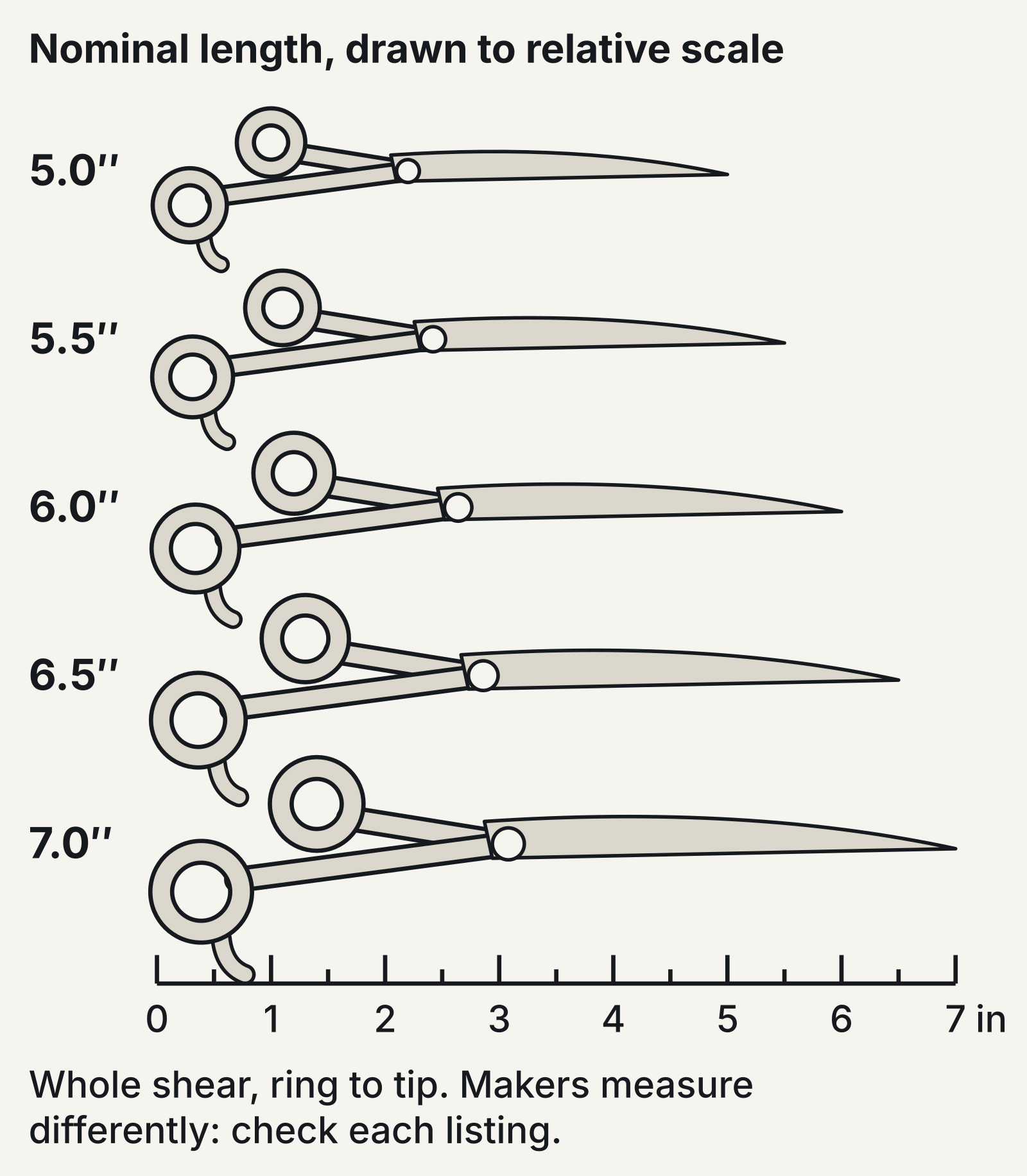
Length is the whole shear, tip to the end of the finger ring, in inches. It is not the blade length. On a 7.0″ shear a little under half of that is blade, and the blade is what spans the comb.
- 5.0″ to 5.5″: detail, around the ears, point cutting, small hands that want a short pivot-to-tip reach.
- 6.0″: the all-rounder. Long enough for most over-comb work on short hair, short enough for detail.
- 6.5″: more blade on the comb without the full reach of a 7.0″.
- 7.0″: flat tops, long tapers and wide scissor-over-comb sections. The barber’s long cutter.
If your current pair runs out of blade across the comb, go up half an inch. If it feels long around the ear, go down. The barber scissor size guide shows how to measure the pair you own and which jobs each length suits. Browse by length: 6.0″, 6.5″ and 7.0″.
Get the hand right before anything else
Left-handed barbers need true left-handed scissors. On a true lefty the blades are reversed, so the cutting line sits where a left-handed barber can see it and the blades close properly under left-hand thumb pressure. A right-handed shear used in the left hand pushes the blades apart and folds the hair.
“Ambidextrous” usually means a symmetrical handle with right-handed blades. It is a handle claim, not a blade claim. Read the left-handed scissors guide for how to tell them apart, then see the best left-handed barber scissors or the left-handed range.
Choose the handle by where your thumb sits
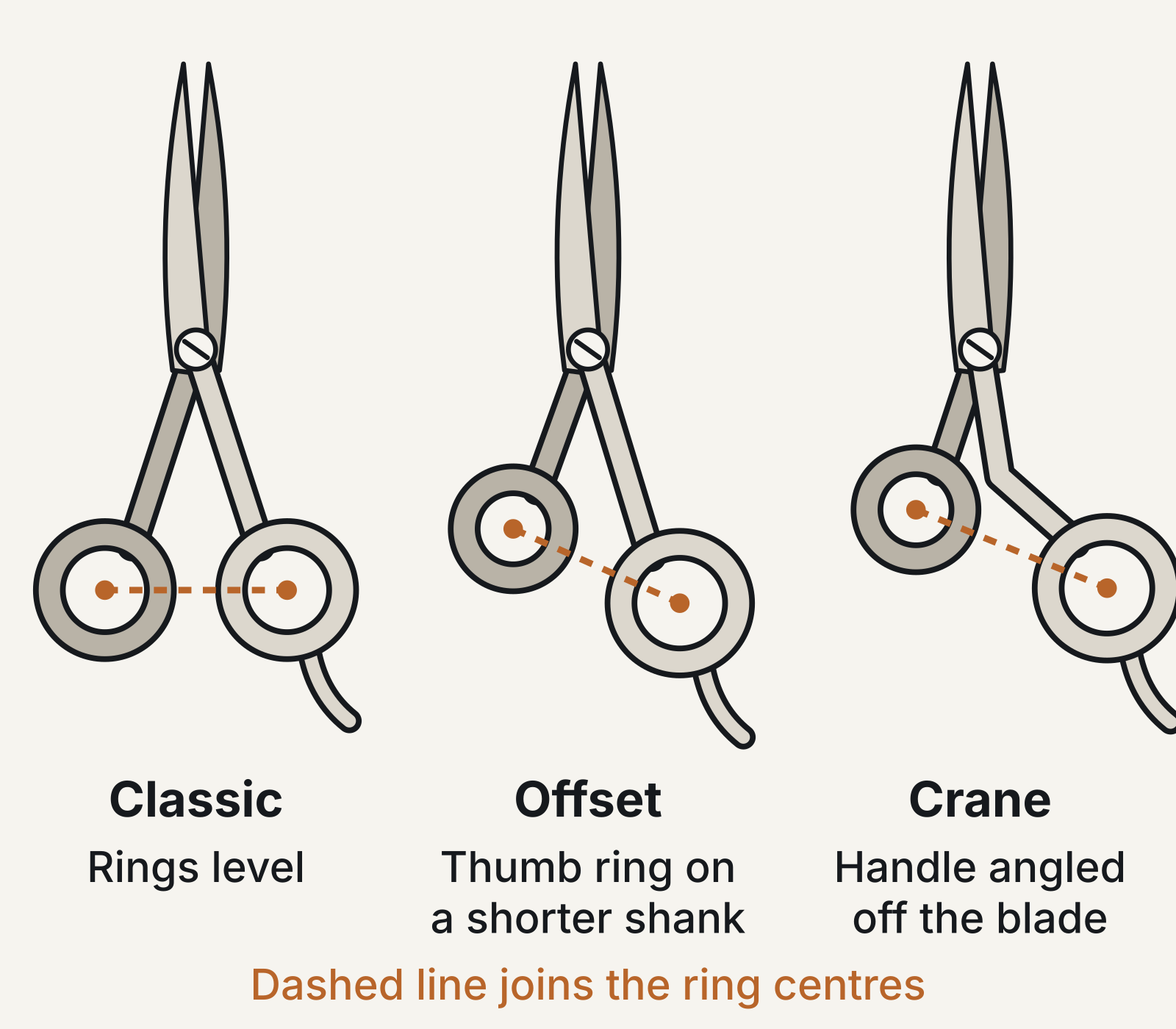
Handle type describes where the thumb ring sits against the finger ring. That changes how your hand opens and how the tip reaches the hair.
Scroll sideways to compare all columns.
| Handle | Ring layout | Suits |
|---|---|---|
| Classic (even) | Both rings level, symmetrical | Barbers trained on a straight hold; over-comb with the thumb low |
| Offset | Thumb shank shorter than the finger shank | Most barbers; open-hand cutting and over-comb |
| Crane | Offset handle angled down from the blade line | Barbers who cut with the elbow low |
| Swivel | Thumb ring rotates on a pivot | Barbers who change thumb angle often through a cut |
Offset is the default for most barbers, and most of our range is offset. Classic suits those who learnt on it. Crane and swivel are deliberate choices: try them when you know what you want the handle to change. The handle types guide explains the geometry. Browse offset, classic or crane handles.
Convex for slicing, bevel for grip
The edge decides how the shear meets the hair. There are two main families.
- Convex edge: a curved blade face that runs to a fine edge. Very sharp and smooth, so it slices and slide-cuts cleanly. Best on wet hair and for point cutting.
- Bevel edge: a flat face with a short angled facet, often with micro-serrations. It grips the hair, so it holds well on dry hair and in scissor-over-comb.
A sword blade is a blade shape, not an edge: a long, straight profile that keeps contact along the comb. Sword blades usually carry a convex edge. Read convex vs bevel edge barber shears for the cross-sections and which jobs each suits.
Read steel and hardness, then move on
Steel matters less than length, hand and handle, but it does tell you something. Hardness is listed in HRC (Rockwell C). Harder steel takes a finer edge and needs the right equipment to sharpen.
Scroll sideways to compare all columns.
| Steel | Typical HRC on our range | Where it sits |
|---|---|---|
| Stainless alloy | 56 to 58 | Apprentice cutters and training sets |
| 440C | 58 to 61 | The working standard: Mina, Ichiro, many sets |
| VG-10 | 60 to 62 | Mid to upper range: much of Juntetsu |
| ATS-314 cobalt | 62 to 63 | Premium: Yasaka, Juntetsu Sword and Kenshi cutter |
The HRC figures come from our product data. The barber scissor steel guide explains each grade, and the VG-10 vs 440C vs ATS-314 comparison puts one stocked cutter per steel side by side. If you are weighing country of make, read Japanese vs German scissors.
Add a thinner when blending is daily work
A thinning shear has one straight blade and one toothed blade. It removes weight and softens lines without changing length. Tooth count and tooth shape decide how much hair each cut takes.
- 30 to 46 teeth: blenders for fades, softening lines and light weight removal.
- 10 to 16 teeth: texturisers or chunkers for heavy texture on thick hair.
Buy the cutter first. Add a 30-tooth blender when blending is part of every shift. The thinning vs texturising guide explains tooth design, and the thinning shears range lists tooth counts on each model.
Set a budget by career stage
Price follows steel, finishing and brand. Spend where it changes the cut you do.
Scroll sideways to compare all columns.
| Stage | Budget | What you get | Where to look |
|---|---|---|---|
| Apprentice | Under A$200 | 440C or stainless alloy, offset, convex or bevel edge | Best apprentice barber scissors, under A$200 |
| Working barber | A$200 to A$400 | Better 440C and VG-10, sword blades, long cutters | Top barber scissors |
| Upgrade | A$400 and up | ATS-314 cobalt, maker finishing, specialist handles | Sword blade shears |
Sets save money when you need both tools. A cutter and a thinner bought together usually cost less than the two singles. Compare them in professional barber scissor sets compared and the sets and kits range. The first barber scissor kit guide lists what an apprentice needs, and the budget planning guide adds the case, oil and servicing to the total.
Skip the five mistakes that cost barbers money
Most regret purchases come from the same short list.
- Buying the longest shear because it says “barber”. A 7.0″ that is too long around the ear gets left in the drawer. Buy the length for the cut you repeat.
- Using a right-handed pair in the left hand. It will never cut cleanly, however sharp it is. Buy a true lefty.
- Changing handle, length and edge at once. If the new pair feels wrong you will not know why. Change one thing from the pair you know.
- Paying for steel before fit. An ATS-314 blade does not fix a thumb ring that sits in the wrong place. Settle the handle first.
- Buying a set for the photo. A set is good value only when you will use both tools every week. Otherwise buy the cutter and add the thinner later.
Apprentices see more of these in apprentice shear mistakes. If you are deciding whether a higher price is worth it, why barber scissors are expensive breaks down what the money buys, and barber shears vs hairdressing scissors clears up the labels.
Compare brands by range and price
Eight scissor brands cover the range we stock. Each has a review that tells you who it suits.
Scroll sideways to compare all columns.
| Brand | Made in | Price tier | Best for | Review |
|---|---|---|---|---|
| Mina | Japan | Entry | First cutters and sets | Are Mina scissors good? |
| Ichiro | Japan | Entry to mid | Working cutters, wide length choice | Are Ichiro scissors good? |
| Jaguar | Germany | Entry to premium | Classic and micro-serrated edges, lefties | Are Jaguar scissors good? |
| Juntetsu | Japan | Mid to premium | VG-10 and ATS-314 sword blades | Are Juntetsu scissors good? |
| Yasaka | Japan | Premium | ATS-314 convex cutters and barber thinners | Are Yasaka scissors good? |
| Joewell | Japan | Premium | Classic handles, long-established models | Are Joewell scissors good? |
| Kasho | Japan | Premium | A V10W offset cutter | Are Kasho scissors good? |
| Kamisori | Canada | Top end | ATS-314 sword sets | Are Kamisori scissors good? |
The barber scissor brand map goes deeper on each range.
Check these before you order online
Buying online is safe when you confirm a few details on the product page first:
- The length option you are adding to cart. Many models come in four or five lengths.
- Handedness. Right-handed is the default; a lefty is a separate model or option.
- Edge and handle. Convex or bevel, offset or classic, as listed in the specs.
- What a set contains. Cutter and thinner lengths can differ.
- Stock state. In stock ships now; for a pre-order, ask us on the product page and we reply by email.
The 10 checks for buying barber scissors online covers the rest, including shipping, returns and the warranty.
Look after them from the first day
A good pair stays good with a 30-second routine: wipe the blades, dry them, put a drop of oil on the pivot, close the shear and case it. Check tension weekly. The barber scissor maintenance guide sets out the routine, and how to clean and oil barber scissors walks through it step by step. When the cut starts to push or fold hair, the blunt scissors tests tell you whether it is time for a sharpening service.
Which pair for you
Apprentice. One 6.0″ offset cutter with a convex edge. The Mina Sakura comes in five lengths with a 440C blade. Add the Mina Sakura cutting and thinning set when blending starts.
Working barber. A 6.5″ or 7.0″ cutter for over-comb plus a 30-tooth blender. The Ichiro Offset runs 5.0″ to 7.0″ with a sword blade; the German-made Jaguar Pre Style Relax suits barbers who prefer a micro-serrated blade.
Upgrade. A cobalt cutter. The Juntetsu Sword offers 6.0″ to 7.0″ in ATS-314 for over-comb. For detail and slicing, the Yasaka Offset runs 4.5″ to 6.0″ with a clam-shaped convex edge in ATS-314.
Still choosing between two? Browse the cutting shears range by length and handle, or read the full guide library.
Questions
What size scissors do most barbers use?
Most barbers work with a 6.0″ to 7.0″ cutter. 6.0″ suits mixed cutting and detail; 6.5″ and 7.0″ give more blade across the comb for scissor-over-comb. A 5.5″ pair is a common second tool for ears, outlines and point cutting.
Should my first barber scissors be offset or classic?
Most barbers start on an offset handle. The thumb shank is shorter than the finger shank, so the thumb ring sits closer to the pivot and the hand stays more open. Classic handles have level rings and suit barbers trained on a straight hold. Both cut the same hair; pick the one your trainer teaches.
Is a convex edge better than a bevel edge?
Convex is sharper and slices cleanly, which suits slide cutting and point cutting. A bevel or micro-serrated edge grips the hair, which suits blunt cutting and scissor-over-comb on dry hair. Many barbers own one of each.
Do I need thinning scissors straight away?
Not on day one. A cutter and a comb cover the base cut. Add a 30-tooth blender when you blend or remove weight every shift, and a chunker (10 to 16 teeth) when you texture thick hair.
How much should I spend on barber scissors?
Apprentices do well under A$200. Working barbers get most value between A$200 and A$400, where VG-10 and better 440C cutters sit. Above A$400 you pay for cobalt steels, maker finishing and long-blade specialist models.
Are Japanese or German barber scissors better?
Neither is better across the board. Japanese makers lean to harder steel and convex edges for slicing. German makers such as Jaguar lean to classic or micro-serrated edges that grip. Choose by edge and handle, not country.