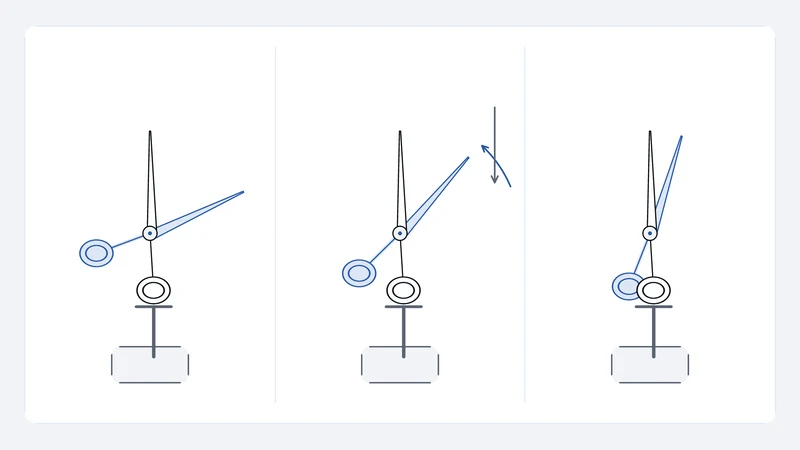
Shear Maintenance & Servicing
The daily routine, the state hygiene rules, and how to know when an edge needs a professional.
By James Adams Updated
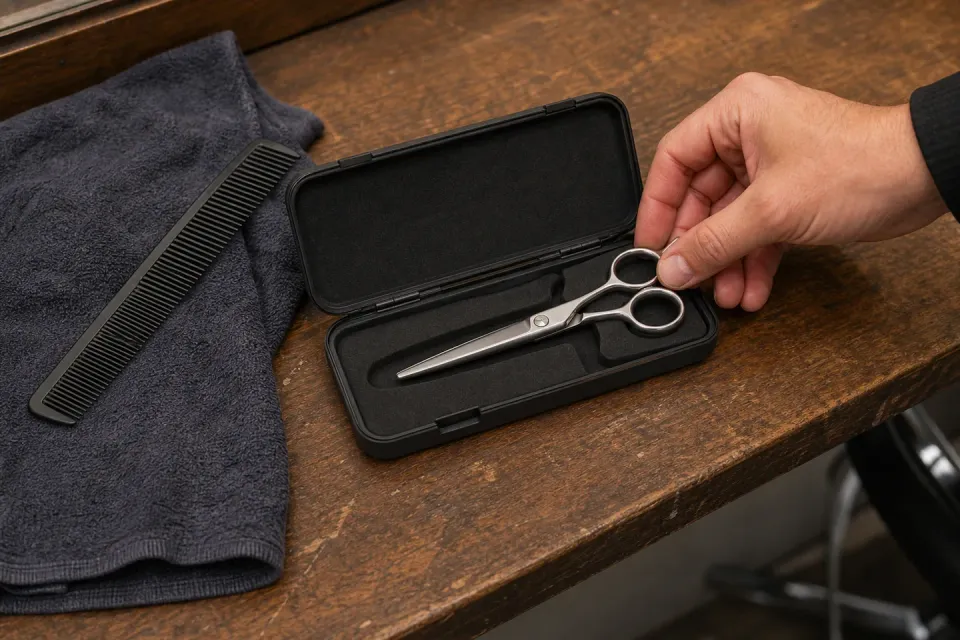
Good shear care is easy to repeat. Clear hair and product, clean the tool using your shop’s process, dry it fully and store each closed shear where its edge cannot hit another tool.
At the station
After cutting, look for hair caught at the pivot or between the blades. Clean and dry the tool before it goes back into its case. Use suitable pivot oil sparingly when the action needs it; wipe away excess.
When the cut changes
A shear that pushes, folds or catches hair may need cleaning, a tension check or professional service. Do not force the cut by squeezing harder. Use a backup cutter while the main pair is assessed. The sharpness guide covers the quick checks.
Choosing a service
Tell the sharpener the shear model, blade edge and what changed in the cut. Ask whether they service that edge type and whether they check alignment and tension. The sharpener guide gives a short question list.
For coastal, humid or dusty conditions, use the climate care guide. Keep a simple note of service dates so you know how your own tools wear.