How Often Should Barbers Sharpen Convex Shears?
Quick answer
Sharpen convex barber shears when the cut changes, not on a set date. The edge is due when hair pushes along the blade, folds at the tips or snags after you have cleaned the shear and set the tension. Heavy dry cutting, scissor-over-comb all day, drops and skipped care all bring the next service forward.
Convex shears need sharpening when they stop cutting cleanly, not after a set number of weeks. A barber cutting dry over the comb all day will reach that point sooner than one who mostly cuts wet. Watch for the signs below, rule out tension and residue first, then book a sharpener who works on convex blades.
Sharpen on signs, not on a calendar
A fixed schedule either sharpens too early, taking metal off an edge that still cuts, or too late, after weeks of pushing and folding hair. Sharpen when the shear tells you.
Jaguar’s care advice puts it the same way: it recommends professional maintenance when the cut is still unsatisfactory after proper care and correct tension, or when the shear needs frequent readjustment.
Five signs a convex edge is due
- Hair pushes along the blade toward the tips instead of cutting where you close.
- The tips fold hair or miss a few strands.
- The edge snags in the same spot on every cut, which points to a nick.
- The cut needs more effort than it used to.
- The cut ends look frayed rather than clean.
Before you book, clean the pivot and run the drop test. Loose tension causes signs 1 and 2 on a sharp edge. The blunt barber scissors tests walk through four checks that separate tension from a dull edge.
What brings the next service forward
Scroll sideways to compare all columns.
| Factor | Effect on the edge |
|---|---|
| Dry cutting | More wear than wet cutting |
| Scissor-over-comb all day | Constant edge contact along the blade |
| Coarse or dense hair | More work per cut |
| Drops and knocks | Chips and bent tips, which need service straight away |
| Skipped daily care | Residue and moisture at the edge and pivot |
| Cutting anything but hair | Paper, thread and tape dull the edge fast |
| Sharing the shear | Different holds and tension settings |
Keep a short service log per shear: date sharpened, what you noticed, and roughly how busy the book was. After two or three services, your own interval for that pair is clear.
Why convex edges need a specialist
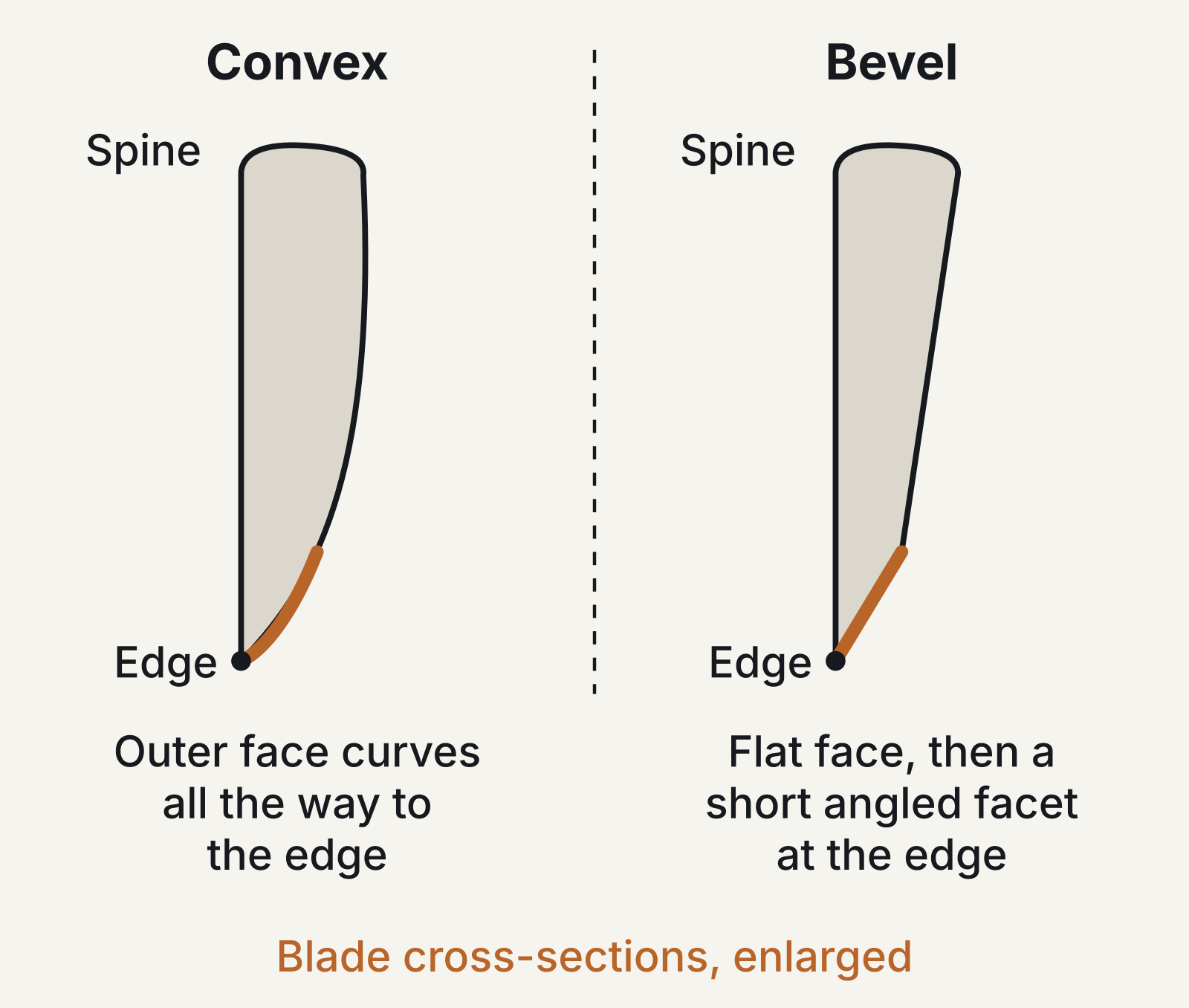
A convex edge has an outer face that curves all the way to a very fine edge, and an inner face that is slightly hollow ground. Both shapes have to survive sharpening. A flat grind puts a facet on the convex face and turns it into a bevel edge, which changes how the shear cuts.
Ask any sharpener how they handle convex blades before booking. The sharpening services guide lists ten questions to ask and how to post scissors safely. The convex vs bevel edge guide explains the two edges.
How to go longer between services
- Wipe after every client and do the full clean and oil at the end of the day. See how to clean and oil barber scissors.
- Check tension weekly with the drop test. Loose blades rub and wear the edge.
- Case the shear closed, in its own slot.
- Use a second pair for rough work, such as dry-cutting thick hair or cutting wigs and extensions.
- Never test on paper.
The full routine is in the barber scissor maintenance guide.
Keep a backup for service days
When your convex cutter goes away, a backup at the same length keeps the book running.
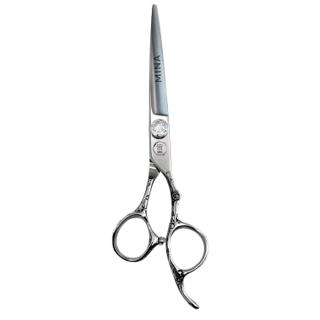
For a convex main cutter in harder steel, the Yasaka Offset uses a clam-shaped convex edge in ATS-314.
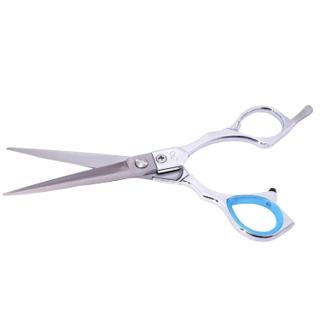
If the pair is past service, start the replacement with how to choose barber scissors or browse cutting shears. For a fault on a new pair, see warranty and servicing.
Choosing a convex pair? The convex-edge list compares cutters by steel, handle and length.
Questions
How often should barber scissors be sharpened?
When they show the signs: pushing, folding at the tips, snagging, or needing more effort, with the shear clean and tension right. Workload, dry cutting, hair type and daily care decide how soon that comes. Keep a log and your own interval will show.
Do convex shears need sharpening more often?
Not by design. A convex edge is finer than a bevel, so a nick or a drop shows sooner in the cut. Good daily care and a case keep it cutting between services.
Can I hone convex scissors myself?
No. A convex edge is a curve from spine to edge with a hollow-ground inner face. Hand-honing on a flat stone grinds a flat facet onto it. Leave sharpening to a specialist and keep the daily routine yourself.
What does Jaguar recommend?
Jaguar's care advice recommends professional maintenance when the cut is still unsatisfactory after proper care and correct tension, or when the shear needs frequent readjustment. Follow your own maker's guidance for its models.
Does sharpening wear the scissors out?
Each sharpening removes a little metal, so a good sharpener takes only what the edge needs. Sharpening on signs rather than on a fixed schedule avoids removing metal from an edge that is still cutting.