Maintenance & Climate Hub
The care routine and the right next guide when a shear starts misbehaving.
By James Adams Updated
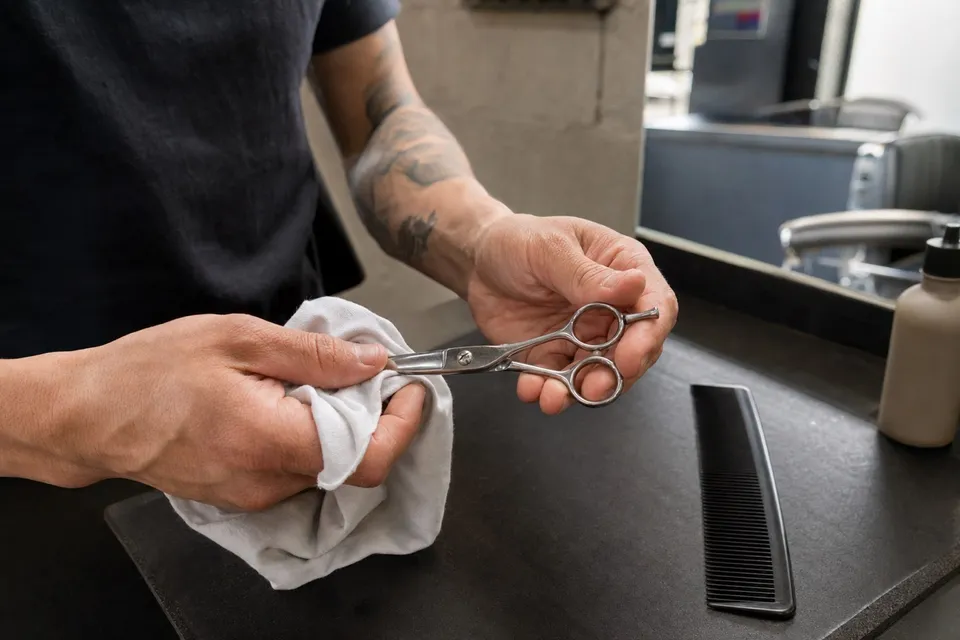
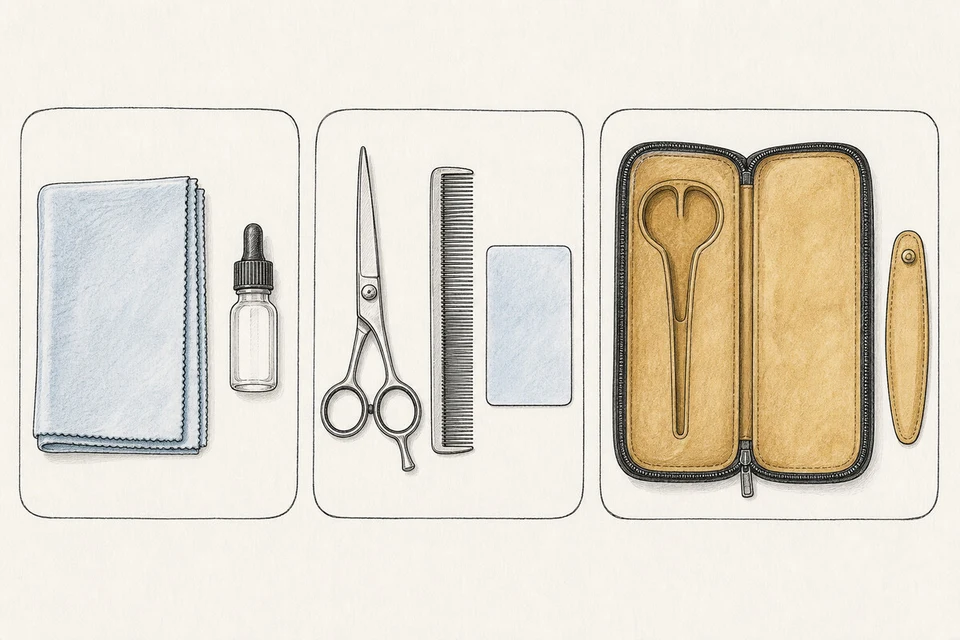
Good care is repeatable: clear the hair, clean and dry the blades, look after the pivot as directed, and put the shear away where the edge cannot knock another tool.
Pick The Guide You Need
- Daily shear care — cleaning, drying, pivot care and storage.
- Cases and holsters — how to carry the active kit and store it between shifts.
- Climate care — extra attention for humid, coastal or dusty shops.
- Sharpness checks — work through a pulling or folding cut before changing tools.
- Finding a sharpener — what to ask before handing over a convex or toothed shear.
- Mail-in checklist — packing a shear for a service trip.
The Simple Station Routine
After a service, clear clipped hair and product from the blades. Follow the cleaning method appropriate to your shop and tool, then dry the shear before it goes into a case. Keep the pivot cared for according to the maker’s instructions.
If the cut begins to pull, stop forcing the shear through hair. Check for trapped hair, tension and visible damage. Then arrange a professional service if the edge still drags.
Need a product-specific care detail? Use the contact form with the model or SKU.