Thinning Shears vs Blenders: What the Names Mean
Thinner, blender, texturiser and chunker sorted by tooth count and by the job each one does.
Quick answer
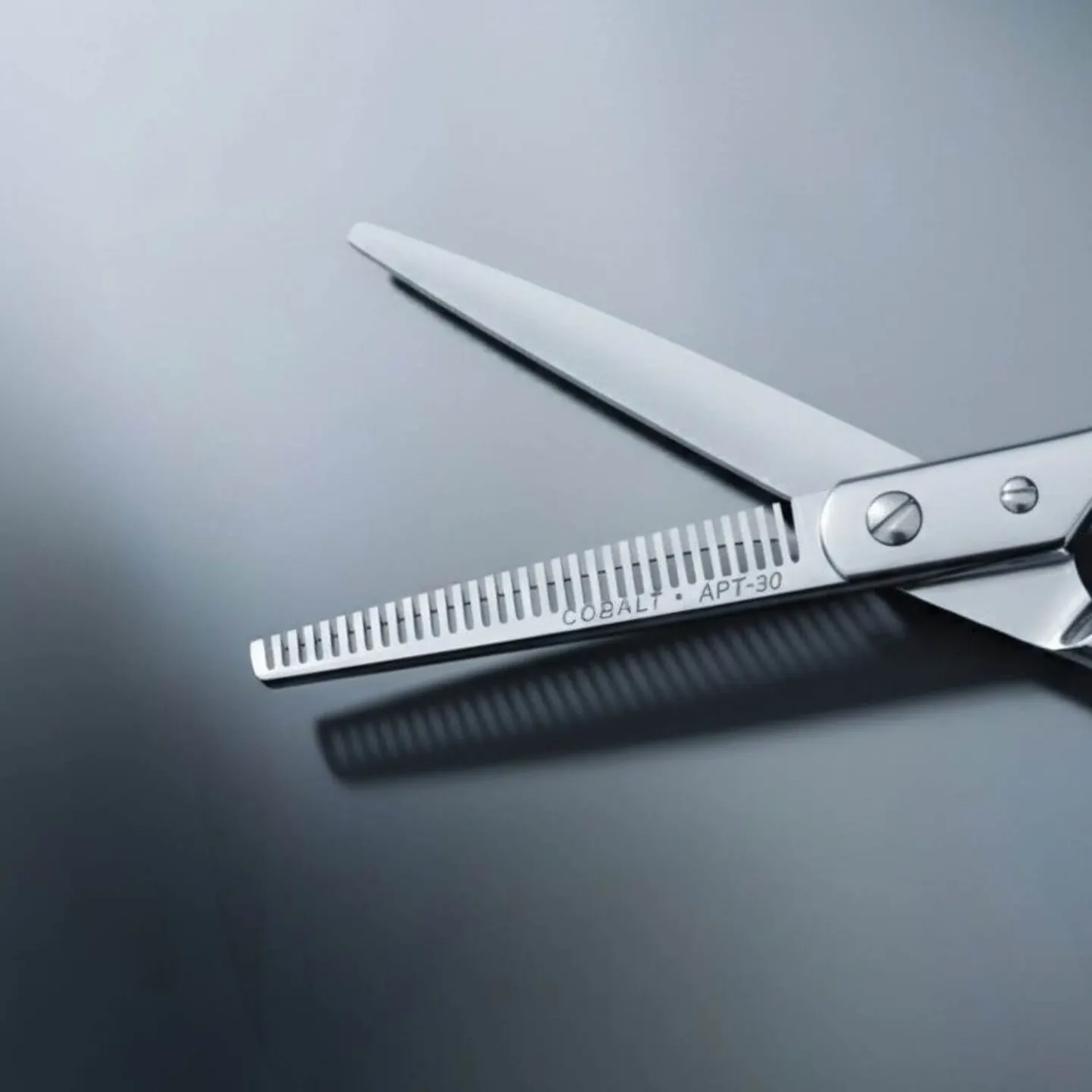
Thinning shears is the family name for any scissor with a toothed blade. A blender is a thinner with fine, close teeth (roughly 28 to 40) that removes a little hair per close. A texturiser or chunker has fewer, wider teeth (roughly 10 to 16) that remove more. Tooth count, not the label, tells you the job.
Top picks
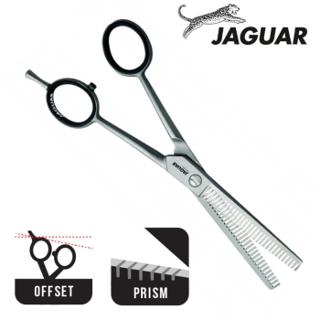
Toothed on both blades
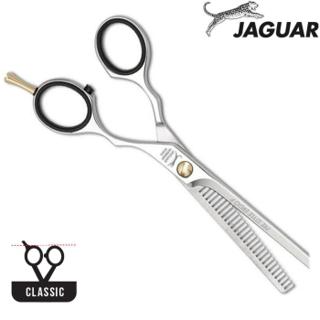
Jaguar Satin Double Sided Hair Thinning Scissors
30/30 teeth, micro-serration, 6.0″
Thinning shears is the family name for any scissor with a toothed blade. Within the family, “blender” and “texturiser” are jobs, and the number of teeth tells you which job a pair does. Brands use the names loosely, so learn the tooth counts and ignore the label.
Key takeaways
- Thinner is the family. Blender, texturiser and chunker are roles.
- Fine, close teeth (about 28 to 40) blend. Wide, few teeth (about 10 to 16) texturise and debulk.
- Neither replaces a cutter. The toothed shear works after the cut is set.
Thinning shears: the family
A thinning shear has teeth on one blade, which means each close cuts only the hair that enters the gaps. The rest of the hair slides through. Compared with a cutting shear, which cuts everything between the blades, the toothed shear removes a fraction.
Some models have teeth on both blades. They are written as a pair, for example 30/30. A double-toothed shear removes hair differently, so confirm the type before you buy.
Blender, texturiser, chunker: the roles
Scroll sideways to compare all columns.
| Role | Typical teeth | What it does | Where barbers use it |
|---|---|---|---|
| Blender | 28 to 40 | Removes a little per close, leaves a soft line | Fade transitions, weight lines, fine to medium hair |
| Texturiser | 14 to 20 | Removes more, starts to show separation | Movement on top, medium to thick hair |
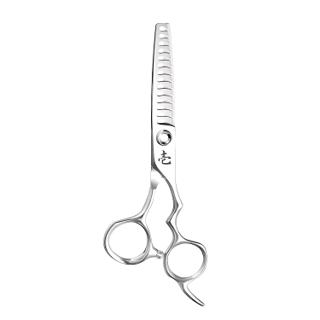
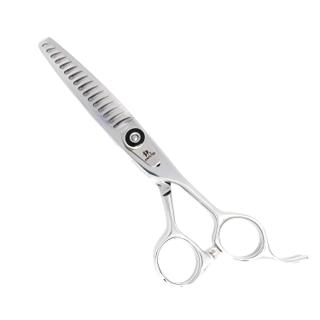
| Chunker | 10 to 16 | Removes the most, leaves visible gaps | Bulk on thick, coarse or curly hair |
The ranges overlap and makers draw the lines in different places. A 20-tooth shear might be sold as either. Use the tooth count and the tooth shape: V-shaped teeth tend to lay hair into the gap, U-shaped are more open. The tooth count guide covers both.
Why the same name can mean different tools
Retail names come from marketing, not from a standard. “Thinner” on one page and “blender” on another can be the same scissor. “Texturiser” on one can be a 14-tooth and on another a 22-tooth.
That is why reading a spec matters more than reading a title. The listing guide shows where to find tooth count and handle type on a product page.
Which one does your work need
Start from the cut, not the tool.
- Fades and soft lines: a 28 to 40 tooth blender. It softens the weight line without shortening it, as in the fade blending guide.
- Thick, coarse or curly tops: a 10 to 16 tooth texturiser or chunker. It takes bulk out faster.
- Both: barbers working across hair types often own one of each and keep the cutter in the same handle style.
How to use them is in the texturising technique guide.
Length and handle
Most thinners are 6.0″, which matches the usual set length. A 5.5″ gives control for detail near the ears. Handle style should match your cutter so the hand does not change between tools; the handle guide explains the options.
Three buying scenarios
An apprentice adding a second tool. You already own a 6.0″ cutter. Buy a 28 to 40 tooth blender in the same handle style. It covers fade transitions and soft lines, which is where an apprentice first needs a toothed shear.
A working barber with thick, coarse clients. You have a cutter and a blender but the tops still sit heavy. Add a 10 to 16 tooth texturiser. It removes bulk in fewer passes, so the chair keeps moving.
A barber who wants one toothed shear for everything. Choose a fine blender and learn to use point cutting for the rest. A single mid-range tooth count can feel like a compromise on both jobs, while a fine blender plus a technique you control does more.
In every case the cutter comes first. A thinner softens and lightens, and it cannot set a length or a line. The set comparison shows cutter-and-thinner pairs that share a handle.
Common mistakes
- Buying a thinner as a first scissor. It cannot set a length. Start with a cutter, as in the first kit guide.
- Treating the name as the spec. Read the tooth count.
- Over-using the blender. Repeated closing in one place leaves holes.
- Ignoring the tooth edge. Teeth need cleaning: hair packs between them, and the pivot needs oil. See the maintenance guide.
Compare models by tooth count
The thinning shear picks compare individual models, and the thinning shears collection lets you filter by length and handle. Your cutter and your thinner should share a handle: the set comparison shows pairs that already do.
All barber guides are listed in the knowledge base.
Further reading: Scissorpedia is an information website and a fellow member of the ShearAlliance.
Questions
Are thinning shears and blenders the same thing?
A blender is a type of thinning shear. Thinning shears is the family name for any scissor with teeth; blender describes the fine-tooth kind used for soft transitions.
What is the difference between a blender and a texturiser?
Tooth count. A blender has many fine teeth and removes a little per close. A texturiser has fewer, wider teeth and removes more, leaving visible separation.
How many teeth should a blender have?
Around 28 to 40. A 30-tooth blender is the common starting point for fades and soft lines. Maker names vary, so read the tooth count in the spec.
Can a thinner replace my cutting scissor?
No. A thinner removes part of the hair in a section and cannot set a length or a line. Cut the shape with a cutter, then use the thinner to soften or lighten.
What is a double-toothed thinner?
A thinner with teeth on both blades, for example 30/30. It removes hair differently from a single-toothed shear, so check which type a listing means before buying.