10 Things a Barber Shop Should Keep with Its Scissors
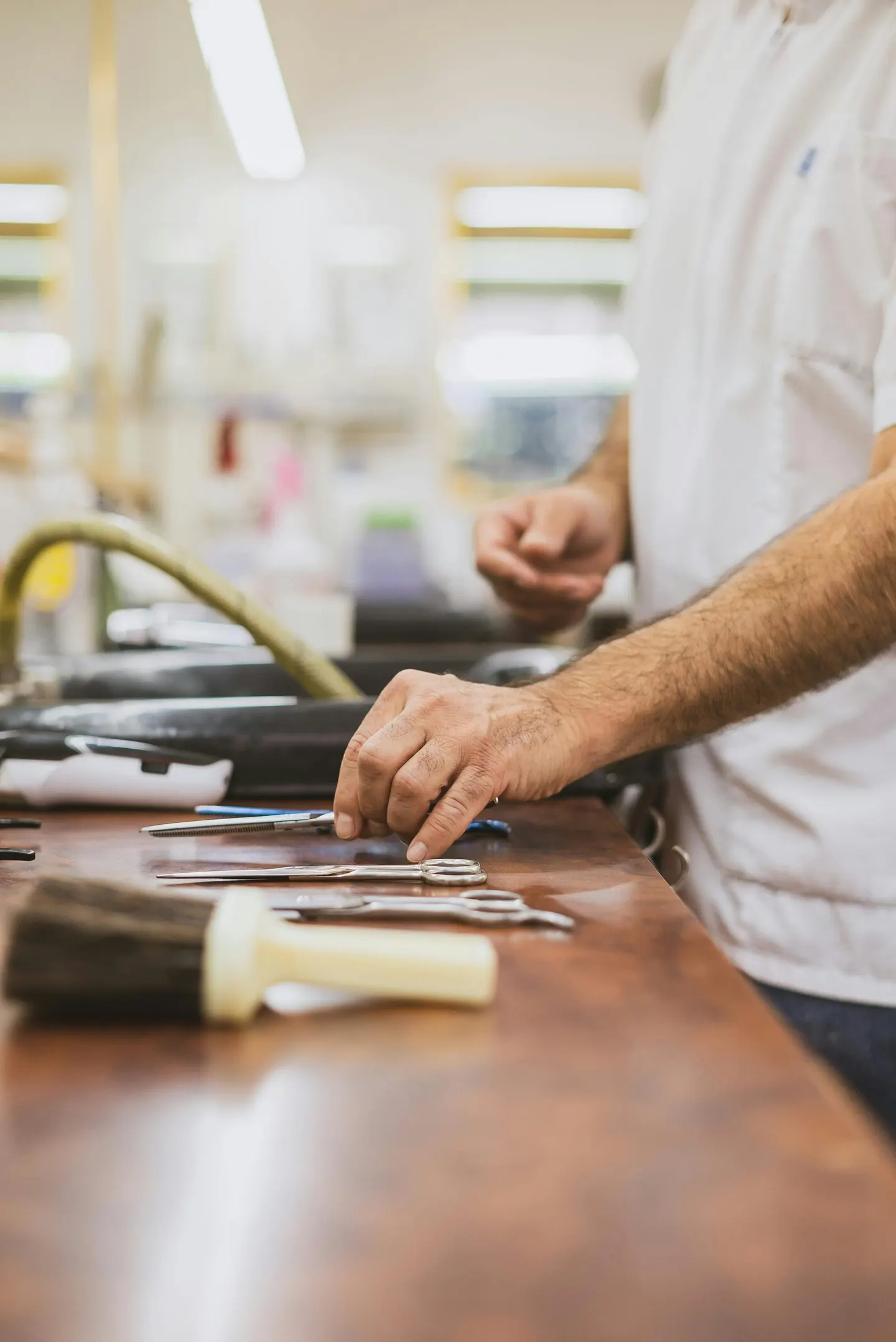
Quick answer
Keep ten things beside the scissors: a sharp backup in each hand and length, scissor oil, soft cloths, a pivot brush, the maker's adjuster, a closing case or holder per barber, a written close-of-day routine, a service log per pair, a sharpener's details and a hygiene process. The scissors then stay cutting and nobody's chair stops.
A shop’s scissors only stay good if the small things around them are in place. This list is those things: ten items to keep at the chair, in the drawer or on the wall, none of which cost much, all of which stop a bad day.
How this list was chosen: each item is something our care and procurement guides already ask a shop to do, turned into a thing you can point to on a shelf. Nothing here depends on a brand or a model. Reviewed 4 November 2026. For choosing the scissors themselves, see the shop buying guide.
The ten items at a glance
Scroll sideways to compare all columns.
| # | Keep | Why |
|---|---|---|
| 1 | A backup per hand and length | A chair never stops |
| 2 | Scissor oil | One drop at close |
| 3 | Soft cloths | Wipe after every client |
| 4 | A pivot brush | Clear packed hair |
| 5 | The maker’s adjuster | Tension in small steps |
| 6 | A case or holder per barber | Tips stay safe |
| 7 | A written close-of-day routine | Same care at every station |
| 8 | A service log per pair | Your own interval shows |
| 9 | A sharpener’s details and packing | Service days are planned |
| 10 | A hygiene process and a sharps container | Clean tools, safe razor blades |
1. A sharp backup per hand and length
Every pair goes away for service. Keep at least one sharp backup in each hand you use and at each main length, so a chair does not stop. A backup has to be able to finish the cut, so a thinner is not a backup for a cutter.
Mark which tools belong to the shop and which to a barber. The shop buying guide sets out an inventory with an owner field.
2. Scissor oil
Keep a light scissor oil, or the oil your maker supplies, at each station. One drop at the pivot at close, worked in and wiped off, is the routine. Avoid cooking oil, which turns sticky, and heavy household lubricants, which hold hair.
A small bottle lasts a long time, so put one at every chair rather than sharing a single bottle across the shop.
3. Soft cloths
A clean, lint-free cloth for every barber, laundered often. Wiping the blades after each client clears hair, water and product before they dry on. A cloth used all day on every surface carries residue back to the steel, so keep the scissor cloth for scissors.
4. A pivot brush
A small, soft brush, such as a clean toothbrush, clears hair from around the pivot with the blades open. Packed hair at the pivot adds drag and holds moisture. Brushing is quicker than prising it out, and it protects the screw.
The cleaning guide shows where the hair collects.
5. The maker’s adjuster
Keep the tension key or screwdriver that came with each pair, with the pair. Models differ, and some have a user adjuster and some do not. Do not take a pivot apart: it changes the tension setting and can damage the screw, so leave stripping down to a sharpener.
The pivot systems guide explains the main adjuster types.
6. A case or holder per barber
A shear left open on the bench is a drop waiting to happen. A closing case or a holster gives each tool a place and keeps the tips off each other. A holster is for working access at the chair; a case or wallet is for the drawer or the bag.
The cases, pouches and holsters guide compares them, and cases and accessories lists what is in stock.
7. A written close-of-day routine
Put the routine on the wall: wipe, dry, oil the pivot, close, case. The same four steps at every station beat each barber’s own variation. Add the weekly drop test for tension.
Write down who checks the routine on a shared bench. The maintenance guide has the full version.
8. A service log per pair
A short log per shear: date sharpened, what you noticed, how busy the book was. After two or three services, your interval for that pair is clear, and you stop sharpening on a calendar. The scissor record library has a tool service history sheet ready to print, with a plain-text version; the rest are in the record library.
9. A sharpener’s details and packing
Know who services your convex shears before a pair needs it, and keep a padded mailer or box for sending a pair away. Ask the sharpener how they handle convex blades before you book. The sharpening services guide lists what to ask and how to post scissors safely.
Pair this with item 1 so the shop never waits on a service.
10. A hygiene process and a sharps container
Follow your workplace hygiene process and your state’s rules. NSW Health’s hairdressing hygiene guidance is one example: it asks for equipment, including scissors, to be cleaned between uses and kept clean and dry. It says not to soak equipment in disinfectant unless the maker’s instructions allow it.
If the shop uses razors, keep a sharps container at the station and change the blade between clients. Wiping and oiling is care, not disinfection, so keep both steps on your list.
What would change this list
A one-chair shop can fold items 7 and 8 into a single card on the wall. A shop with several chairs should add a shared inventory and give each tool a labelled place. A mobile barber needs item 6 more than any other, and the mobile kit guide covers that.
Pick by role
- Apprentice on the floor: items 3, 6 and 7. A cloth, a case and the four-step routine.
- Barber with a chair: items 1, 5 and 8. A backup, the adjuster and a log.
- Shop owner: items 7, 9 and 10. One routine on the wall, a named sharpener and a hygiene process.
Compare scissor sets and kits if you are stocking a new chair, or start from the complete buying guide.
Shop-owner guides and checklists are collected in the knowledge base.
Questions
How many spare scissors should a barber shop keep?
At least one sharp backup per hand and per main length, so a chair never stops when a pair goes for service. A shop with one right-handed 7.0″ in use needs a right-handed backup it can cut with, not just any spare.
Who owns the scissors in a barber shop?
Decide it in writing. A barber's own pair is theirs; a shop spare belongs to the shop. A pair is not a shared spare unless the barber agrees. An inventory with an owner field settles it.
Do barber shops need to disinfect scissors?
Follow your workplace hygiene process and your state's rules. Wiping and oiling is care, not disinfection. NSW Health's guidance, for example, asks for equipment to be cleaned between uses and kept clean and dry, and not soaked unless the maker allows it.
What should be in a scissor care kit at each station?
A soft cloth, light scissor oil, a small brush for the pivot and the maker's adjuster for the pair. Add a closing case or holder so the shear is never left open on the bench.