Barbershop Owner's Shear Procurement Playbook
Standardise the kit across chairs: spec sheets, a buying workflow, and money controls an accountant recognises.
By James Adams Updated
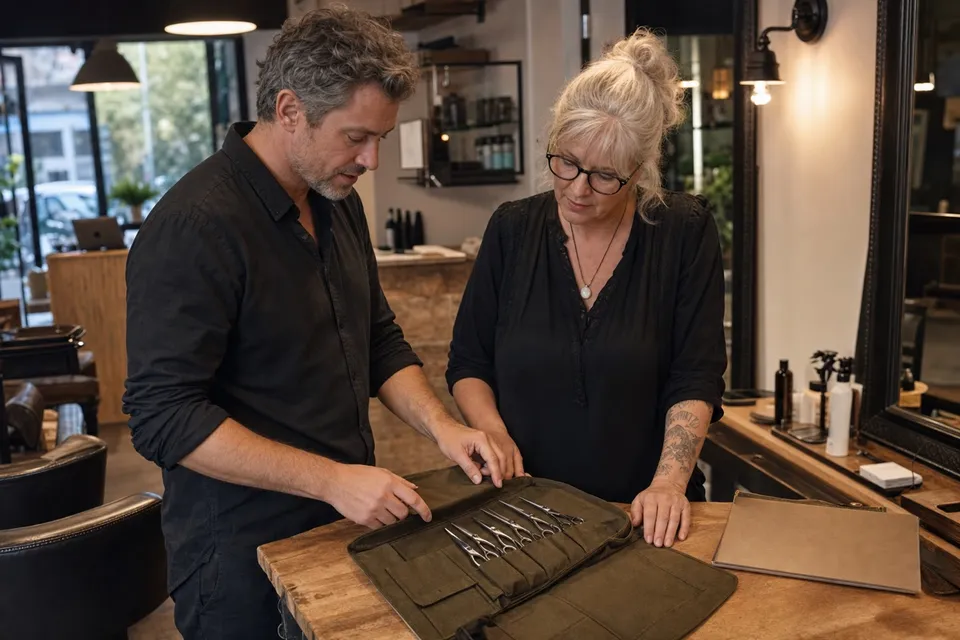
Buying for several chairs starts with a short list of jobs, not a shelf of matching logos. Write down what each barber cuts most, the blade length they use and whether they need a thinner or left-hand build.
Set the chair standard
- Main cutter: record length, handle and edge.
- Specialist tool: add a longer comb-work blade or a thinner only where the service calls for it.
- Backup: keep a working cutter available while another is serviced.
Use the same fields when comparing product pages. A set can be efficient, but check both shear sizes and the thinner tooth pattern before ordering several.
Keep it usable
Label shop-owned tools, protect each shear in storage and make the closing care routine easy to follow. Track which pair is away for service so a busy chair never has to borrow an unsuitable tool.
The budget guide helps sequence purchases. Browse cutting shears, thinners and left-handed options against the jobs your team performs.