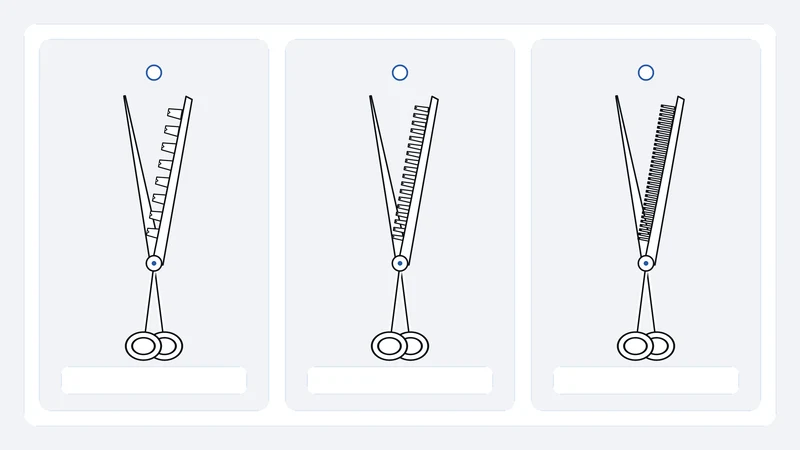
Choosing Shears By Hair Texture
What coarse, fine, curly and blended hair ask of blade length, edge, and tool changes — answered with geometry.
By James Adams Updated
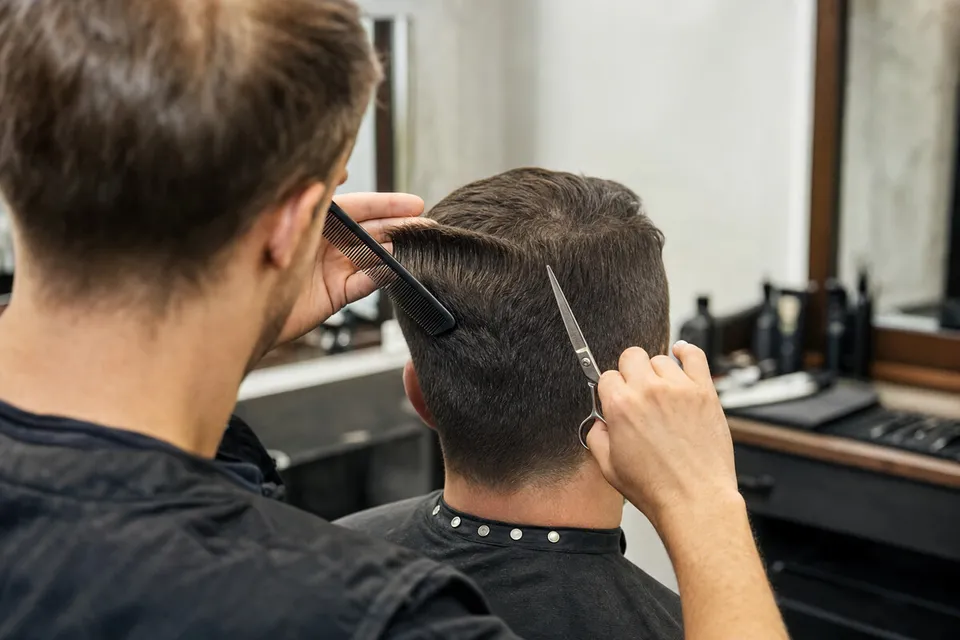
Hair texture changes the way you section and finish a cut. It does not mean every client needs a different steel. Start with a cutter you control, then add a second tool for the job your main blade cannot do well.
Dense or coarse hair
Smaller sections keep the cut predictable. A longer blade can help with wider scissor-over-comb passes; a 6.5-inch or 7-inch cutter is worth comparing if that work fills your book. Use a thinner only where you want weight removed.
Fine hair
Every line shows. A compact cutter helps place the edge accurately, and a light pass with a finer thinner can soften a transition without taking too much. Start with the 5.5-inch range and check the texturising guide before buying a second tool.
Curly or coily hair
Work with the hair’s natural fall and check the shape as it settles. Shorter blades can help with local detail; a thinner should be used deliberately so texture remains where it gives the cut shape.
For a mixed book, build a simple station: one main cutter, one thinner and a second blade length only when your technique calls for it. The first kit guide shows how to start.