A Mobile Barber's Day: From Packing to Pack-Down
How to run each stop, protect the kit between stops, and what to do when a tool fails away from the shop.
Quick answer
A mobile barber's day has four phases: pack the kit and count it, set up each stop with clean and used tools apart, wipe and recount before leaving, and clean, dry and case everything at the end. Carry a backup cutter in the same hand so a dropped pair does not end the booking.
Top picks

Full rotation
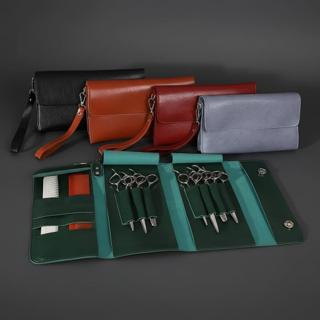
Juntetsu Sentinel Fold Wallet - 8 Pocket Professional
Eight pockets with protective flaps
A mobile barber runs the same service as a shop barber with fewer places to put things. The day goes better when the kit is counted out and back, each stop has a clean and a used place, and the scissors are cased between stops. The mobile kit guide lists what to carry; this page is the workflow around it.
Key takeaways
- Count the kit out and back.
- Keep clean and used tools apart at every stop.
- Close, dry and case the scissors between stops.
Phase 1: pack and count
Pack the night before, not at the door. Lay the kit out, count each tool, then case it. The checklist is in the mobile kit guide, and the cases guide compares wallets and holsters.
Check each scissor before it goes in: the action, the tension and a quick wipe. If one needs oil, do it now, not in the client’s kitchen. See the oil, tension and storage guide.
Phase 2: arrive and set up
- Choose the spot. Good light, a stable seat, space to move round the client.
- Protect the floor and the surroundings.
- Set two places. One for clean tools, one for used. A small tray or mat for each works.
- Lay out only what the service needs. Leave the rest in the case.
- Check the kit is where you expect. A quick count at the start makes the count at the end easy.
Infection-control and sharps rules for your work still apply. Check what applies where you operate, and see Safe Work Australia for general workplace guidance. The cleaning routine is in the between-clients guide.
Phase 3: between stops
After each service:
- Wipe the blades and clear the pivot.
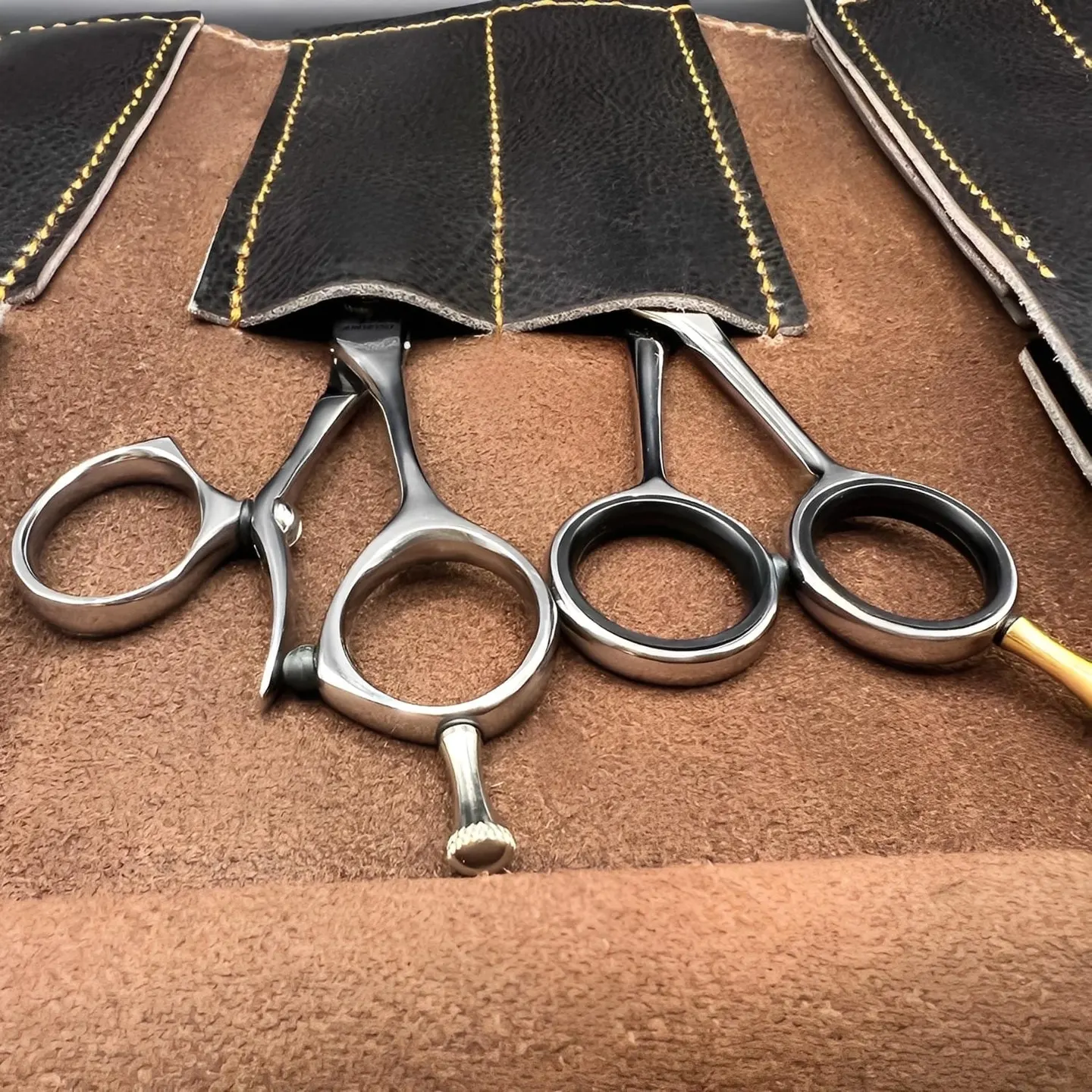
- Close the scissors and put them in their own pocket.
- Count the tools. The count catches a left-behind pair before the car moves.
- Dispose of blades in a sharps container if you used a razor. See razors and blades basics.
- Pack flat inside the bag so clippers and bottles cannot press on the case.
When a tool fails mid-day
Plan for it. A dropped scissor can have a bent tip or a changed tension, so look before you use it again.
- Use the backup. It must be sharp, in the same hand and a length that can finish the cut. See choosing length by technique.
- Mark the damaged pair as used and set it aside.
- Deal with it after the day. Check the pair on the bench, and use the sharpener handover guide if it needs service.
Travelling further
For a day trip the workflow above is enough. For flights, the rules for scissors in baggage are in can you take scissors on a plane in Australia. For posting tools for service, use Australia Post and the packing advice in the sharpening guide.
Keep the kit dry
Humidity and car interiors cause trouble. Dry everything before casing, avoid leaving the kit in a hot car and use the habits in the climate care guide.
Phase 4: pack-down and close
At home or at the end of the route:
- Empty the case and lay the tools out.
- Clean, dry and oil the pivots.
- Check tension on the scissor you used most.
- Recount against the packing list.
- Case and store the kit in a dry place.
A worked day: three stops
A mobile barber has three bookings: a home cut at nine, a workplace cut at eleven and a house call at two.
At home, packed the night before, the kit is counted into the car. At the first stop the barber sets a clean place on the bench and a used place on a mat, works the cut, wipes and cases the scissors, and counts the kit before leaving.
At the workplace, the space is tighter, so the barber lays out only the cutter, comb and blender and leaves the rest in the case. A dropped comb is swapped for a spare from the bag without stopping.
At the house call, the barber finishes the day with a beard trim and a razor line-up, drops the used blade in a sharps container and counts the kit again. At home, everything is cleaned, dried, oiled and cased.
None of the steps are long. What makes the day work is that none of them are skipped. The mobile kit guide has the checklist for the count.
Common mistakes
- Packing in a hurry. The kit goes out short.
- One place for all tools. Clean and used mix.
- Casing damp scissors. Dry first.
- No backup. One dropped pair ends the booking.
- Skipping the end count. A pair left at a client’s is a lost pair.
Pick by stage
- Apprentice doing a few home bookings: one cutter, a backup and a closing case.
- Full-time mobile barber: a cutter, a backup, a blender and a wallet with a pocket per tool.
- Mobile team: a shared kit list and a log, as in the team kit guide.
All guides are indexed in the knowledge base.
Further reading: Scissorpedia is an information website and a fellow member of the ShearAlliance.
Questions
How should a mobile barber set up at a client's place?
Pick good light, protect the floor, set a clean-tool place and a used-tool place, and lay out only what the service needs. Close the case between uses so tools are not left open.
How do I protect scissors in the car?
Closed, dry and in their own pockets, flat in the bag, away from clippers and bottles. Do not leave the kit in a hot car or loose on a seat.
What if a scissor breaks or is dropped at a stop?
Use the backup in the same hand and finish the service. Put the damaged pair in the used place, note the fault, and deal with it after the day. Do not cut with a dropped pair until you have checked it.
Can I take my kit on a plane?
Scissors go in checked baggage. The plane post covers the rules.