Taper or Fade? Doing the Taper With Scissors
How the two differ, how to pick the neckline shape and how to build a taper from the shortest zone up.
Quick answer
A taper shortens hair gradually around the neckline, sideburns and ears. A fade runs the gradient higher up the sides. The labels overlap, so agree the shortest length and the height of the transition. A scissor taper is built with scissor-over-comb, working up from the shortest zone.
Top picks
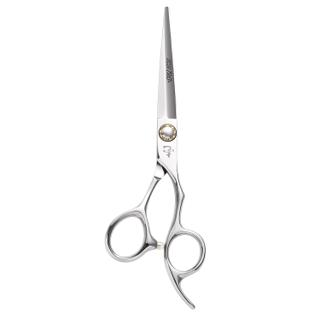
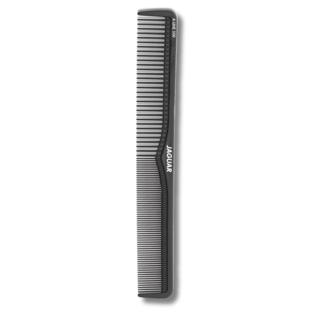
Clients ask for a taper and a fade as if they are two rungs on one ladder, and they are. Both are gradients. The difference is how high the transition climbs and how much of the head it covers. Here is how to choose, and how to build the taper with scissors.
Key takeaways
- Taper and fade overlap. Settle it with a reference image, not a word.
- A taper can be built with scissors, clippers, trimmers or a planned mix. The scissor taper is one traditional way.
- Pick the neckline shape first (blocked, rounded or natural), because it drives everything else.
- Check each pass with a cross-check from another direction.
Should the client get a taper or a fade?
Choose by how much contrast the client wants and how much transition they want to see. A taper keeps the change low and gentle, so the top and sides read as one shape. A fade starts higher, so the contrast with the top is bolder. A taper fade combines both: a taper at the back and a fade at the sides. The names, from low to drop fade, are laid out in cut names explained.
Ask three things: how short at the neckline, how high the change goes, and what they want to see from the front. Show the plan with a photo or by pointing on their head. No grow-out interval fits every client, so agree maintenance from how fast their hair grows and how sharp they want the finish.
Which neckline shape do you want?
Pick the shape before you cut, because it fixes the outline you build the taper into.
Scroll sideways to compare all columns.
| Shape | What it looks like |
|---|---|
| Blocked (square) | A deliberately straight lower line with defined corners |
| Rounded | A defined lower line with rounded corners |
| Tapered (natural) | Length fades out through the natural hairline with no hard outline |
A natural neckline ends softly with no hard outline. A blocked one is defined, so it depends on that outline staying crisp. Talk through regrowth with the client before you choose.
How do you build a scissor taper?
Build it from the shortest zone upwards, with the comb setting the guide and the scissors removing what sticks out. The comb and blade mechanics are in the scissor-over-comb steps; this is the order of work that is specific to a taper.
- Set the outline. Decide the neckline shape and the sideburn line, and mark them against the ears.
- Start at the shortest zone. Set the comb at the neckline so its teeth lift the hair away from the scalp, and cut what stands above the teeth in small, steady strips.
- Climb in overlapping passes. Each pass sits a little longer than the one below it, so the gradient builds without a step.
- Follow the head. The comb follows the curve of the skull so the line stays smooth around the corners, the ears and the sideburns.
- Connect into the top. Blend the last pass into the longer hair above, using the band approach in how to blend a fade with shears.
- Cross-check. Comb the hair the other way and look for steps. Fix them with light passes.
Slow beats fast: do not move the scissors faster than the comb.
What about clippers, and where does the lineup fit?
Many barbers use clippers or trimmers for the lowest zone and scissors for the connection. Clipper-over-comb works on the same idea with a clipper as the cutter. The choice depends on the finish you want, your reach, the tool noise and your own confidence, and neither is the only correct tool. Scissors versus clippers splits the jobs by tool.
A lineup is the frame around the shape: forehead, temples and neckline. Trimmers or clippers usually set the outline, and scissors then remove overhanging strands. Regrowth softens the line over time, and the interval depends on the client. The beard and neckline guide covers the scissor side of the outline.
What do you check on the shears?
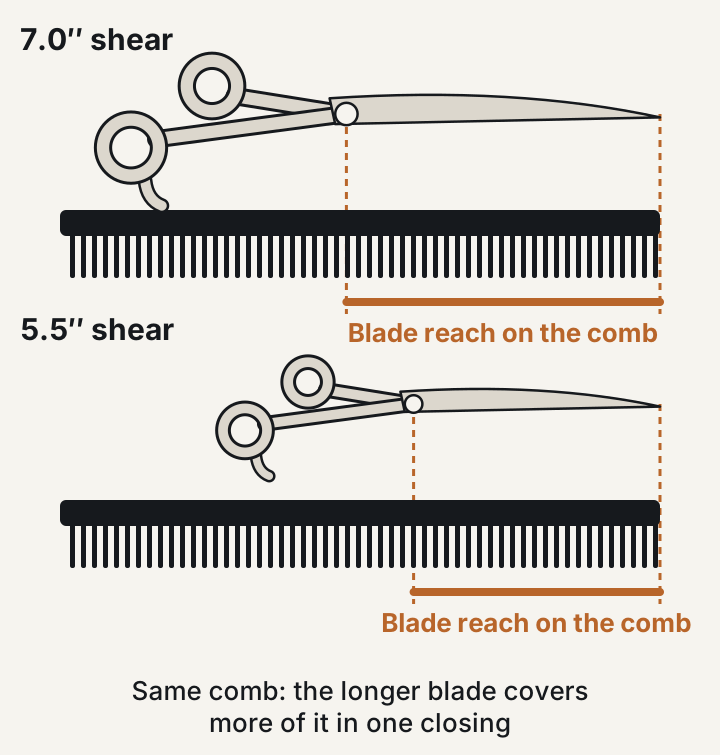
- Reach over the comb. The blade should cover the comb width you use. A longer blade gives more coverage per pass, and a shorter one suits detail around the ears.
- Parallel travel. The blade should lie along the comb without nicking the teeth.
- Tension and pivot. Loose or gummed blades fold hair. Clean the pivot and test the tension before the client sits down.
- Clean tips. Detail work at the neckline needs tips that meet.
If hair folds after both checks, take the shears to a qualified professional sharpener. A maker’s own over-comb notes, such as Joewell’s scissor-over-comb guidance, show how a long blade is used on the comb. The length by technique guide and the 7-inch range cover the lengths that suit this work.
More barber guides sit together in the knowledge base, and the barber scissor FAQ answers the questions people ask most.
Further reading: Scissorpedia is an information website and a fellow member of the ShearAlliance.
Questions
Is a taper just a short fade?
Close, but not exact. A taper stays around the neckline, sideburns and ears, and a fade climbs higher. The labels overlap, so settle it with a photo.
Can I taper with scissors only?
Yes. Scissor-over-comb can build the whole taper. Some barbers use clippers low down and scissors to connect, and both give the same gradient.
Which comb should I use for a scissor taper?
One rigid enough to hold the hair and wide enough for the area. Practise with the comb you will use on clients, because the teeth set the line.
How often should a taper be refreshed?
It depends on how fast the client's hair grows and how sharp they like the finish. Agree the interval at the chair rather than quoting a fixed number.