By James Adams ·
Barber Shear Blades: Edge and Profile
A plain-language guide to convex, micro-serrated and sword-profile shears, and how each changes the cutting choice.
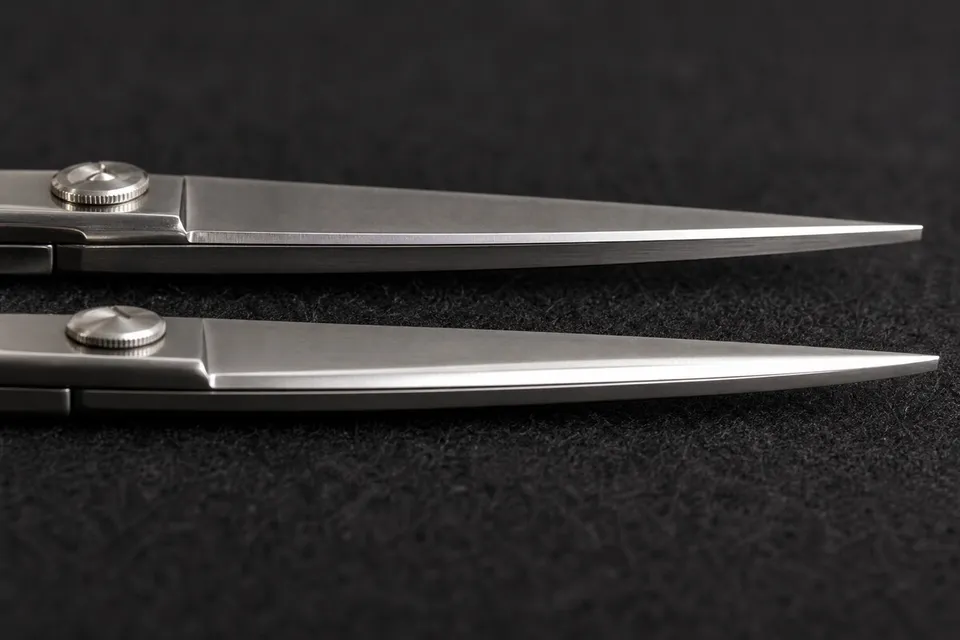
Blade labels make more sense when you start with the job. Do you need the hair to move along the edge, stay put through a blunt cut, or give you more blade over the comb?
Smooth Convex Edge
A smooth edge allows more glide. Barbers often choose it for moving cuts, point work and a clean finish. Compare the selected model’s blade length and handle as well as its edge label.
Micro-Serrated Edge
Fine serration helps hold a section in place during a cut. That can suit blunt lines and scissor-over-comb. Tell your sharpener if the serration matters to how you use the shear.
Sword Profile
A sword profile describes blade shape rather than a separate cutting job. Models vary in length, weight and edge, so compare the actual listing. A long sword-profile cutter and a compact one will not feel alike over the comb.
For thinning shears, tooth design becomes the main choice. The texturising guide explains how to compare them. The cutting shear guide brings size, handle and edge together.
Questions about a shear?
Choosing your next shear or checking an order? Send us the details and we’ll help you find the next step.
Latest blog posts
Read all blog posts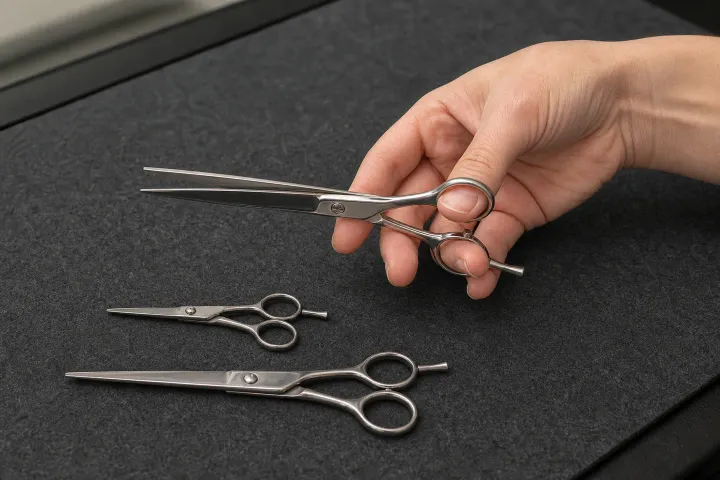
Yasaka vs Juntetsu: Which Barber Scissor Brand Wins?
Yasaka or Juntetsu for a barber station? Compare their cutters, thinners and sets by the job, grip and selected size.
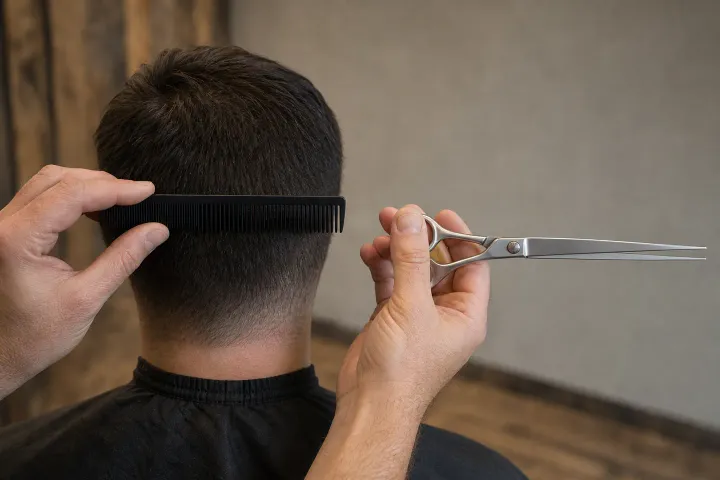
Best Sword Blade Shears for Barbers
Sword-style barber shears suit long comb sections and deliberate slicing. Compare single cutters with cutter-and-thinner sets.