Two-Block Cut With Scissors
Section the head, place the step, set the lower block, shape the top and soften the edge of the break without losing it.
Quick answer
A two-block cut has a short lower block and a clearly longer upper block with a visible step between them. Place the step first, set the short block as your reference, then cut the top to its own length with scissors. Soften the edge of the break only as far as the design allows.
Top picks
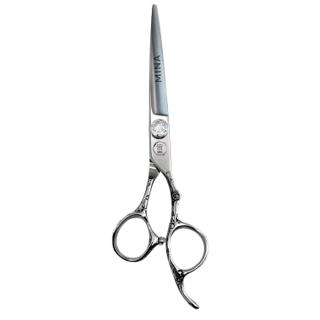
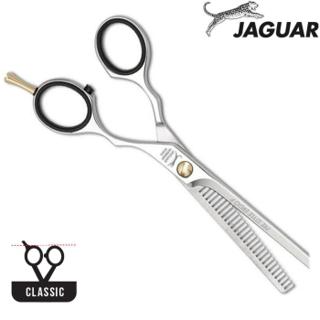
Fine blender for the edge of the break
Jaguar Pre Style Ergo P 28 Hair Thinning Scissors
28 teeth, classic handle, 5.5″
A two-block cut lives or dies on one line: the step between the short block and the longer top. Place it with intent and the cut reads as design. Drift it and it reads as an error. Here is how to section, cut and blend it with scissors doing the shaping work.
Key takeaways
- The name is Japanese-coined English. The defining feature is the visible step between two blocks.
- The step is a disconnect: two zones cut to their own guides, not married together.
- Cut the shortest zone first and build around it.
- On the top, scissors do the shaping, point cutting adds texture and a toothed shear can adjust weight.
- A planned break is design. An accidental one is a mistake.
What is a two-block, and how is it different from a fade or an undercut?
A two-block divides the head into two blocks with a step between them, where a fade runs a smooth gradient. In the Japanese-coined definition, the lower block is clipper-cut to one short length and the upper block stays significantly longer. The top usually falls naturally forward, which reads softer than a slicked-back undercut.
An undercut pushes the same logic harder: clipper-short sides against a dramatically longer top, with a disconnected undercut having no blend between the two. Japanese kariage is a slope, and the two-block is a step. That is the one-line test. Cut names explained puts both beside the taper and the fade.
How do you section the head?
Section the head so the top is clipped away from the lower block, with a clean parting line where the step will sit. Use the client’s reference photo and the shape of the head to choose the height, then check it from the front, side and back.
Make a quick checklist before you cut:
- Height of the break: the same on both sides.
- Lower block length: one agreed length, not a gradient.
- Top length: long enough to fall forward as the client wants.
- Sides and sideburns: how much stays, and how they finish.
Where does the disconnect sit?
The disconnect sits at the parting line between the blocks, at a height you choose before the first cut. A break set too low looks like a short back and sides with a long top. Set high, it looks like a bold contrast. Decide with the head shape in mind and check it is level around the head.
Plan the break, then cut. Work inside-out: the short block first as a fixed reference, then the top around it. That stops the line drifting as you build the longer lengths. The same sequence drives the modern mullet and wolf cut plan.
How do you cut each block?
Set the lower block first, then shape the top.
- Lower block. Clippers are the common way to reach one short length. Scissor-over-comb can set or refine it if you prefer a scissor-built surface. Keep the length even, because the step only reads clearly against a clean block. The scissor-over-comb steps cover the method.
- Top, length first. Cut the top with scissors to its own guide. If the top needs a firm outline, a straight blade with a bevel or semi-convex grip is the usual pairing; the edge guide compares the options.
- Top, texture second. Point cutting breaks up the ends. If the top is heavy, a toothed shear can adjust weight. Use the model’s stated cut rate and test small.
- Edge of the break. Check the hair where it meets the step. Remove stray long hairs along the parting line without bevelling the step away.
How do you blend a two-block without losing the step?
You blend the surface of each block, not the gap between them. A hard exposed break wants a clean line. A softened, subtle break is worked along the boundary with slide, point and stroke passes, usually with a curved convex blade. That is advanced work, so practise it on a training head before a client.
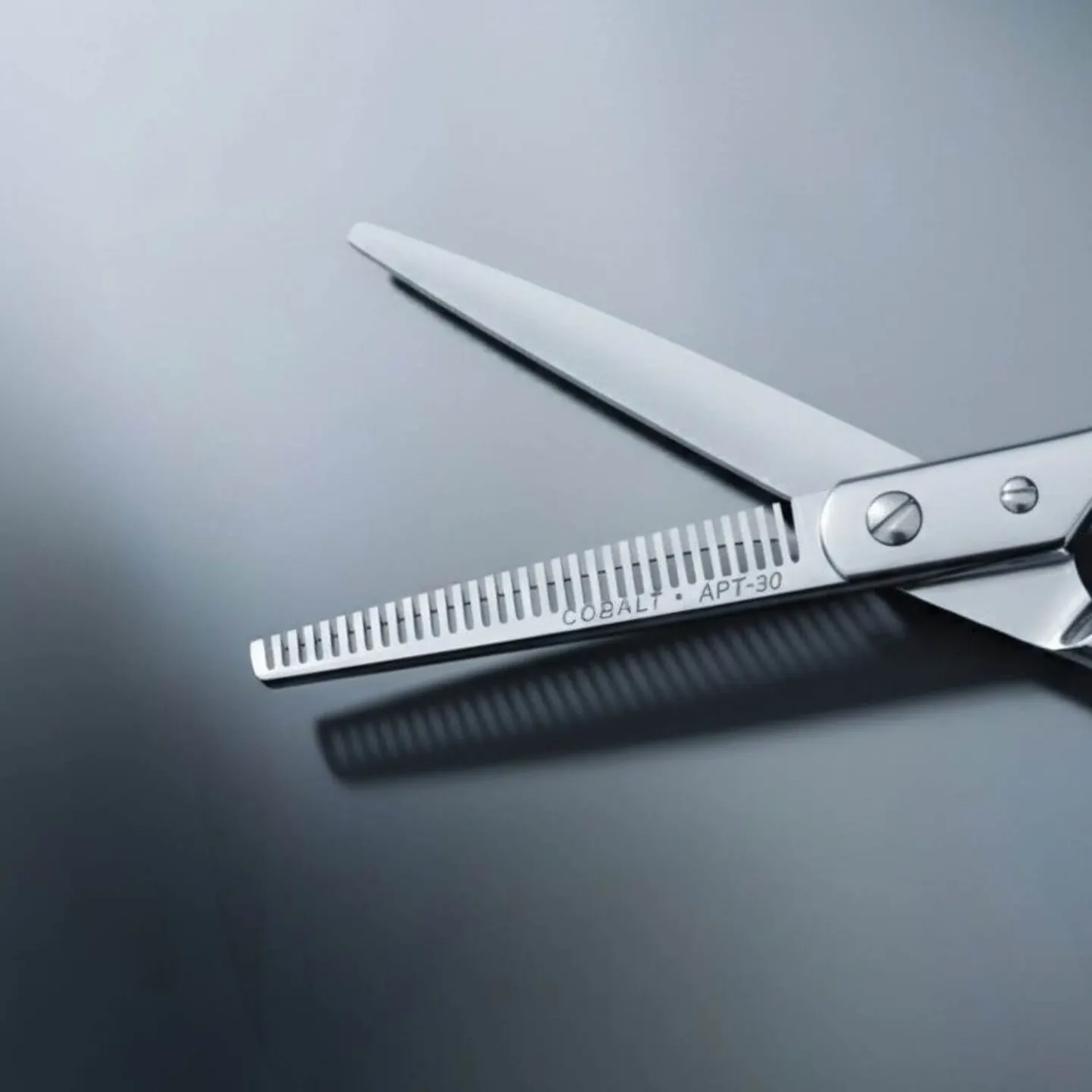
A finer toothed model on the edge of the top, used conservatively, softens the edge without turning it into a fade. Thinners versus blenders explains which toothed shear does that job, and how to blend a fade with shears is the guide to read if the client wants a gradient instead.
What do you check on the shears?
- Tips that meet, for clean point cutting on the top.
- Tension that holds through a long section. Loose blades push hair.
- A clean pivot and a smooth action for slide passes.
- Reach that suits the work. A long blade covers more of the top per close, and a shorter one gets into tight spots at the sideburns.
If the blades fold hair after cleaning and a tension check, ask a qualified professional sharpener to look at the edge. Texturising technique for barbers covers weight removal on a heavy top, and the barber scissor FAQ answers the questions people ask most. More barber guides sit together in the knowledge base.
Further reading: Scissorpedia is an information website and a fellow member of the ShearAlliance.
Questions
Is a two-block the same as an undercut?
They share the disconnect idea. A two-block top usually falls forward and reads softer, and an undercut pushes the contrast further.
Can I blend the step into a fade?
Then you have a fade or a taper fade, not a two-block. The step is the point of this cut.
Do I cut the lower block with scissors?
Clippers are the common choice, but scissor-over-comb can build or refine the lower block if you want a scissor-built surface.
What if I cut the step uneven?
Re-check the height from the front and the sides before you touch it again. Cutting more without checking makes it worse.