Modern Mullet and Wolf Cut: A Scissor Plan for Barbers
Map the zones, place the disconnect on purpose, layer the top and texture in small passes.
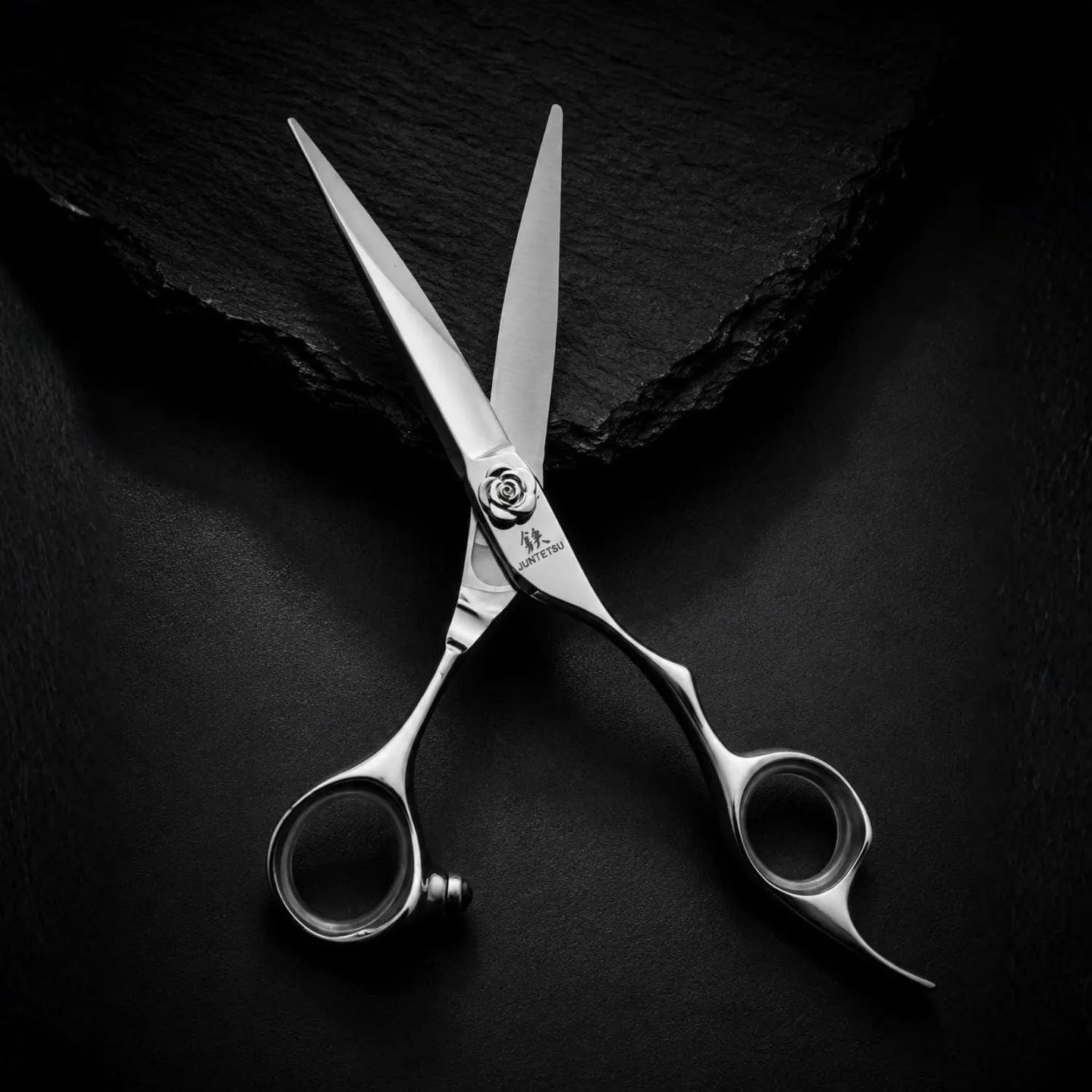
Quick answer
A modern mullet keeps more length at the back than at the front and sides. A wolf cut is a heavily layered shape with a disconnect between a lifted top and the longer lengths below. Plan the zones first, place the break on purpose, then point cut, slide and texture lightly to build the shape.
Top picks
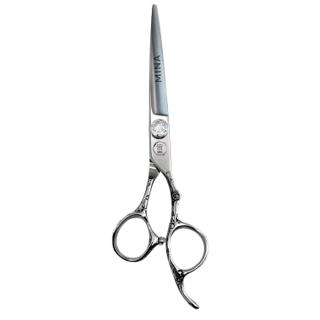
Cutter for point and slide cutting
Mina Sakura II Hair Cutting Scissors
Convex edge, SUS440C, 5.0″ to 7.0″
The modern mullet and the wolf cut look loose, but they are planned cuts. Both live on a deliberate break between short and long, and both reward a barber who decides where that break sits before picking up the scissors. Here is how to map the head, place the disconnect and build texture without losing the shape.
Key takeaways
- A modern mullet keeps visibly more length at the back than at the front and sides. It does not need faded sides.
- The wolf cut is shag-style layering with a break (a “waist”) between the top and the longer lengths.
- An accidental disconnect looks like a mistake. A planned one looks like design.
- Point cutting, slide cutting and channel cutting do the texture. Toothed shears are optional.
- Texture last, in small passes, and check how it falls.
What is the difference between a mullet, a wolf cut and a shag?
They sit on one family tree. A shag uses heavy layering with textured, feathered ends and visible steps, and the wolf cut grows out of it. The wolf cut pushes the volume contrast: short-to-medium top layers rounding into volume, longer thinner layers below, and a pinched waist between the two zones. The modern mullet is the barbershop sibling, with a silhouette that keeps more at the back and often shorter sides.
The names are loose labels. Perimeter, fringe and tool path change with the reference image, so settle those in the consultation: the client consultation scripts cover the questions. Cut names explained puts the mullet beside the other four cuts.
How do you plan the zones?
Plan the zones on the client’s head before you cut. Split the head into the sides, the crown or top, the face frame and the back length. Note where the break will fall and what length sits above and below it.
Work inside-out. Cut the shortest zone first and use it as the fixed reference, then build the longer sections around it so the break does not drift. If the sides will be short, set them first. If the sides stay long, set the crown layers first.
Where does the disconnect go?
The disconnect goes where the short zone ends and the long zone begins, and it should sit the same distance from the same landmarks on both sides. Cut the zones to their own guides and do not blend them across the break. A break can be exposed and graphic or hidden under a longer overlay.
A softer, subtle disconnect is worked along the boundary with slide, point and stroke passes. That is advanced work, so practise it on a training head first. The two-block cut uses the same idea with a harder step.
How do you layer the top without losing the break?
Layer the top inside its own zone and stop at the break. Layering lifts hair away from the head and cuts it so the upper sections are shorter and the lower sections keep length. The key is consistency: if your lift drifts between sections, the weight line shifts and the layers read uneven. Check from the side as well as the front, using a second mirror if you have one.
A longer blade clears a wide panel in fewer closes, which helps consistency, and a shorter blade is easier to place in tight spots. Neither fixes a shaky plan. The length by technique guide shows which length fits which job.
Which scissor moves build the texture?
- Point cutting: turn the tips into the ends to soften the perimeter and break up the layers. Heavy point cutting is common in these shapes.
- Slide cutting: partly open blades travel along the hair for soft transitions. Keep the section small and stop if the tool drags or folds hair. Never loosen the tension as a trick: follow the maker.
- Channel cutting: small, placed gaps for separation in thick hair. Place them, never gouge them.
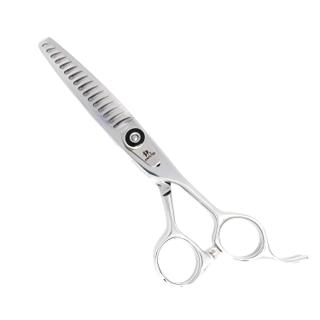
- Toothed shears: can take bulk out while keeping volume. Use the model’s own stated cut rate and test small.
Slide cutting can remove length quickly if the section, entry or path is wrong, so practise on a training head. Texturising technique for barbers covers how much to take out and the mistakes to avoid, and thinners versus blenders sorts the toothed-shear names.
What do you check on the shears?
- Tips that meet cleanly, so point cutting stays tidy.
- Tension that holds mid-slide. Loose blades push hair instead of cutting it.
- A clean pivot. Product gums the action.
- A smooth edge for slide work. If the blades drag or fold hair after a tension check and a clean, a qualified professional sharpener should look at the edge.
The tension, oil and storage guide covers the first two checks. A convex edge is the usual pairing for point and slide work, and the convex versus bevel guide explains why.
More barber guides sit together in the knowledge base, and the barber scissor FAQ answers the questions people ask most.
Further reading: Scissorpedia is an information website and a fellow member of the ShearAlliance.
Questions
Does a modern mullet need a fade?
No. A burst fade is one option for the sides, but the name only requires more length at the back than at the front and sides.
What makes a wolf cut different from a layer cut?
The disconnect. If you connect the top layers to the lengths below, you have an ordinary layer cut. The wolf cut keeps a break between the lifted top and the longer base.
Do I need toothed shears for a mullet or wolf cut?
Not necessarily. Plain cutting shears can build the shape. Add a toothed model only when you need bulk control, and use its published cut rate rather than its tooth count.
Can I cut these with clippers only?
Clippers can handle short sides. The longer top and the back length need scissor work.